Final Crisis Reading Order: The Day Evil Won (2008)
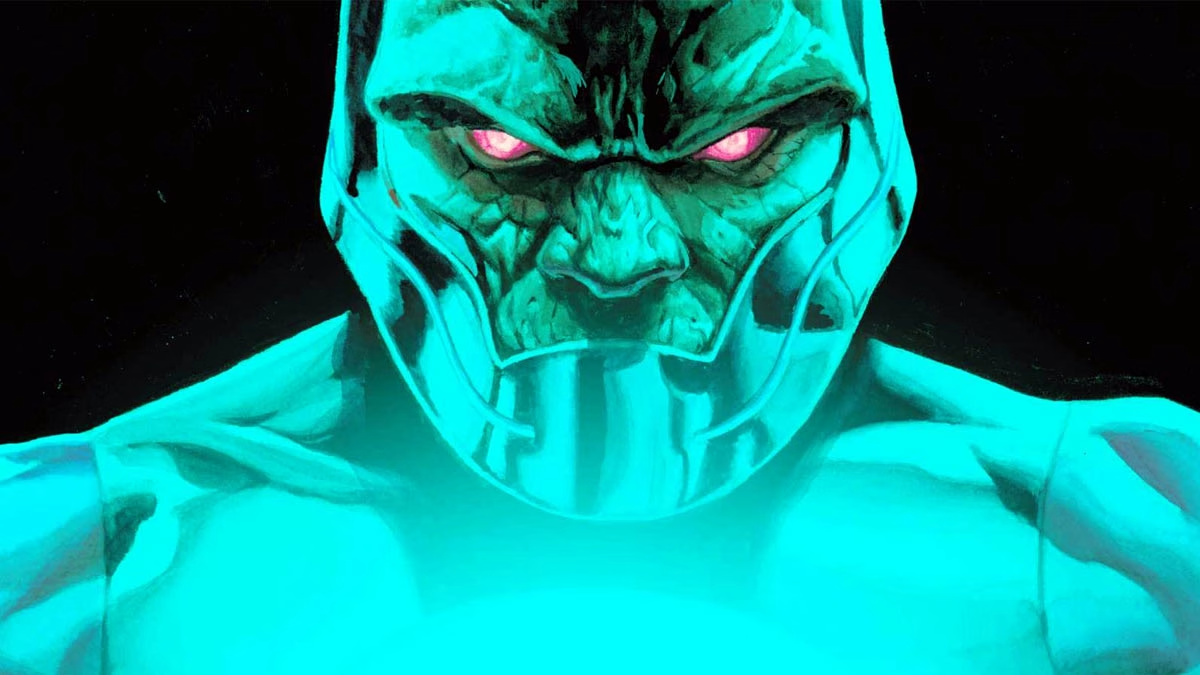
With Batman R.I.P., Grant Morrison not only wrote the psychological destruction of the Dark Knight, but also paved the way for a new threat menacing the whole DC Multiverse, one that went beyond physical conquest. Final Crisis is the story of the “God of Evil,” Darkseid, finally discovering the Anti-Life Equation and using it to enslave the consciousness of the human race.
This isn’t a war fought only in the streets, it’s a war fought for the soul of reality. As the “New Gods” of Apokolips fall to Earth and inhabit human hosts, the sky turns red, time begins to collapse, and the heroes of the DC Universe are forced into a final stand against a darkness that has already won.
Table of Contents
- Historical Context: The Fourth World Falls
- A Short Review
- Collecting Final Crisis in 2026
- Full Reading Order
- After the Crisis: The Battle for the Cowl
1. The Fourth World Falls: What is Final Crisis?
The Final Crisis is about the “Death of the New Gods,” the end of the Fourth World, but mostly about Morrison finally putting on paper some ideas he had years ago that he started to explore through Seven Soldiers and 52.
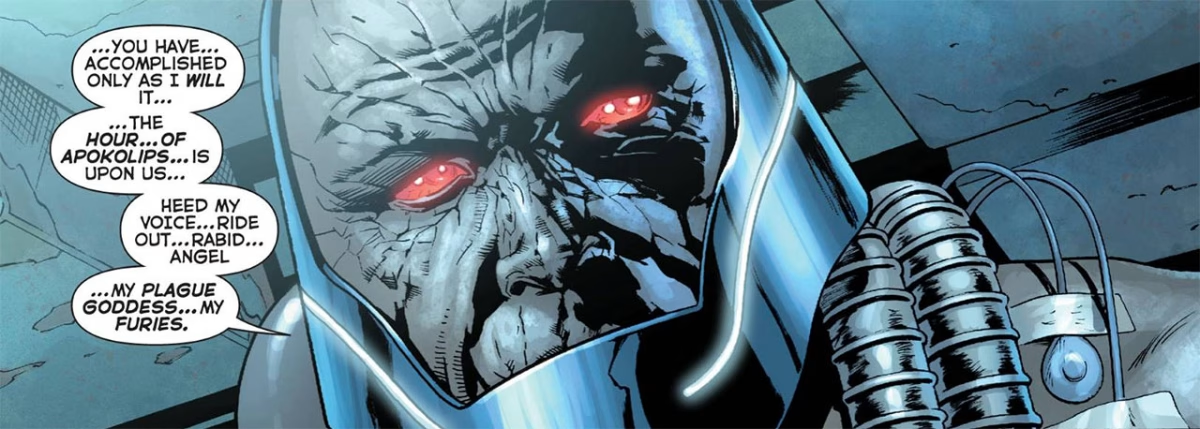
Darkseid has fallen through time and landed in a “human skin” (aka Boss Dark Side), dragging the weight of his dark divinity onto Earth. By releasing the Anti-Life Equation (a metaphysical formula that eradicates free will) through every digital screen on the planet, he turns the population into mindless extensions of his own will. As its influence spreads across Earth, heroes, villains, and civilians alike are systematically corrupted, transforming society into an extension of Darkseid’s will while the fabric of space-time begins to collapse.
It’s also a multiversal crisis involving parallel worlds, cosmic entities, and the fundamental structure of existence. Superheroes from across Earth and the wider Multiverse are forced into a final resistance against a reality already in the process of disintegration.
📂 Key Story Elements:
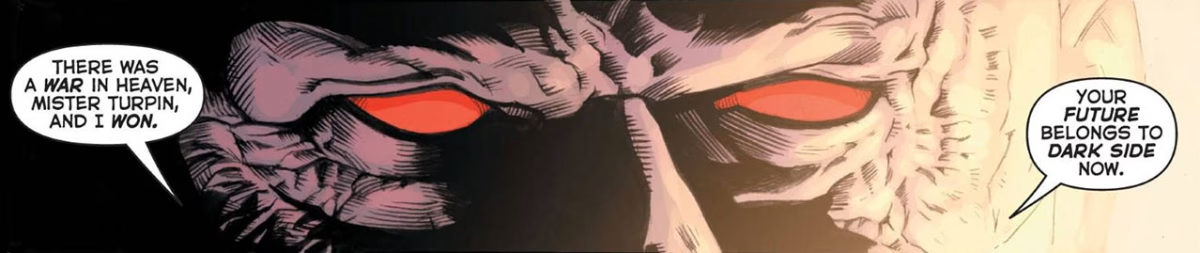
- The Fall of the Fourth World: The mystery begins with the murder of a god, investigated by Dan Turpin and the Green Lantern Corps.
- Darkseid and the Anti-Life Equation: The core conflict revolves around Darkseid’s use of the Anti-Life Equation, a formula capable of eliminating free will. Through technology, Anti-Life spreads across Earth, converting humanity into obedient extensions of Darkseid’s will.
- Reality Breakdown and Cosmic Entropy: As Darkseid’s presence grows, reality itself begins deteriorating. Time, space, and causality become unstable, creating an atmosphere where the universe feels physically exhausted and close to total collapse.
- The Meta-Textual Threat: The event introduces the Mandrakk and the Monitors, cosmic vampires that feed on the “stories” of the Multiverse itself.
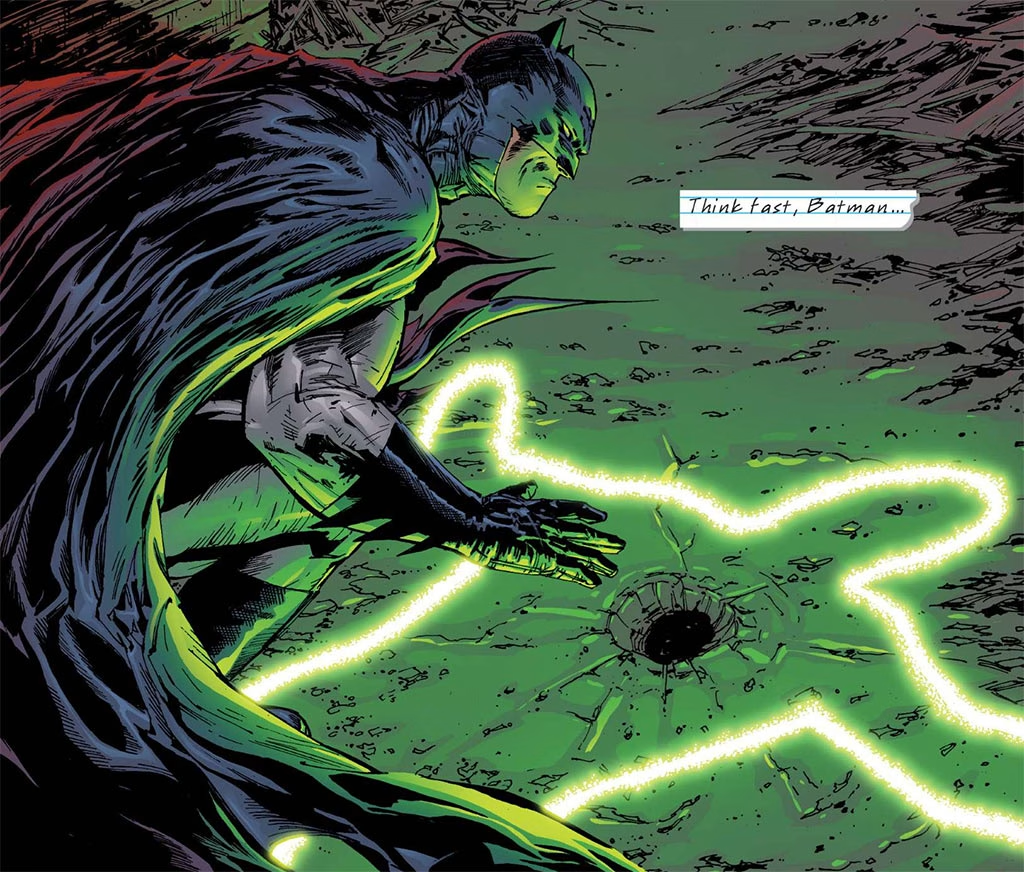
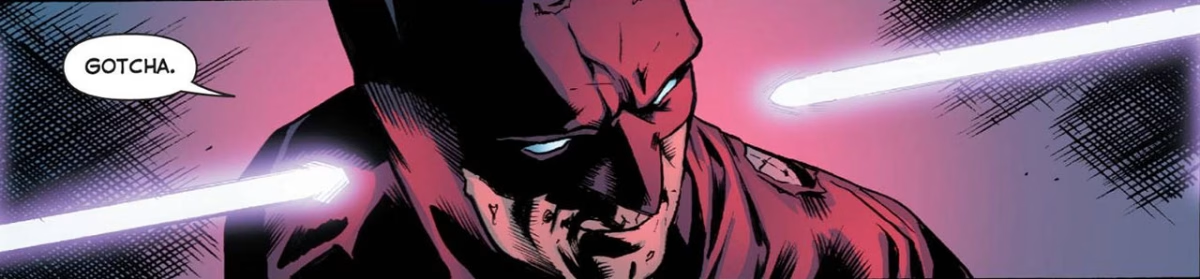
- The Deaths of Heroes: Another major story element is the role of Batman in resisting Darkseid. During the climax, Batman breaks his moral code by using a weapon specifically designed to harm Darkseid, triggering one of the event’s most iconic moments. This planted the seed for “The Return of Bruce Wayne” storyline.
- The Return of Barry Allen: After 23 years of being “deceased” following Crisis on Infinite Earths, the Silver Age Flash is making a comeback.
2. A Short Final Crisis Review
As much as I love Grant Morrison’s work, there are times when I’m just lost. I’ve learned to push forward and wait for clarification that will help me revisit the story with a better understanding. Final Crisis is exactly the kind of story I just had to read and wait for some explanations. I got lost in concepts that felt forced on me without clear justification, making me feel I missed an issue here and there. While this wasn’t an overwhelmingly pleasant read, it was still rewarding to reach the conclusion and understand what had happened. The thing is, even when all is said and done, there are still elements of the events I can’t make sense of. It doesn’t help that some tie-ins don’t add to the plot in the way I was expecting, which could have given me a better understanding of the whole story.
Final Crisis doesn’t fumble as hard as Countdown to Final Crisis, editorially speaking, but there are serious mishaps again with tie-ins written by people who were clearly not made aware of what was happening. It adds to the confusion. For me, the main miniseries temporarily lost the plot here and there because events became too abstract, while the tie-ins could not get all the facts straight. Still, if you stick to only reading the core series, you only have to deal with half the problems.
On the art side of Final Crisis, it would have been great if J. G. Jones could have done the whole miniseries. His compositions are more dynamic than those of Marco Rudy, who did a decent job. Doug Mahnke penciled the last issue, and it was good, too, even if I’m not a fan of the faces he drew.
Overall, Final Crisis is divisive for good reason. You’ll probably need to read it at least twice to get the most out of it (the first time is to get in the right headspace). It was too short for Morrison to really let his idea breathe, so it felt cramped and nebulous at times.
3. Collecting the Case in 2026
Through the years, DC Comics reprinted the events in multiple formats, most of the time by focusing on the issues written by Grant Morrison (like with the standard trade paperback or the DC Essential Edition).
There is a Final Crisis Omnibus, though, which collects all the main issues and tie-in miniseries and one-shots.
- Final Crisis Omnibus (collects Batman #676-683, #701-702, Birds Of Prey #118, Dc Universe #0, DC Universe: The Last Will And Testament #1, Final Crisis #1-7, Final Crisis: Legion Of 3 Worlds #1-5, Final Crisis: Requiem #1, Final Crisis: Resist #1, Final Crisis: Revelations #1-5, Final Crisis: Rogues’ Revenge #1-3, Final Crisis: Secret Files #1, Final Crisis: Submit #1, Final Crisis: Superman Beyond #1-2, The Flash #240-241, Justice League Of America #21, Superman/Batman #76, Teen Titans #59-60 and Terror Titans #1-6)
- It’s also available digitally on DC Universe Infinite.
The trade paperback editions collect what is essential for the events, the issues written by Grant Morrison: Final Crisis #1-7, Batman #682-683, Superman Beyond #1-2, and Submit #1.
- Final Crisis: The 2014 Paperback Edition.
- Final Crisis: The DC Essential Edition (also available on Kindle)
- It’s also available digitally on DC Universe Infinite.
The Final Crisis tie-ins have also been collected in trade paperbacks that may be hard to find today:
- Final Crisis Companion (Collects Final Crisis 1: Director’s Cut, Final Crisis: Requiem #1, Final Crisis: Resist #1, and Final Crisis: Secret Files #1)
- Final Crisis: Rogues’ Revenge (Collects Final Crisis: Rogues’ Revenge #1-3, The Flash vol. 2 #182 and #197)
- Final Crisis: Revelations (Collects Final Crisis: Revelations #1-5)
- Final Crisis: Legion of Three Worlds (Collects Final Crisis: Legion of Three Worlds #1-5)
4. The Complete Final Crisis Reading Order
According to Grant Morrison, you only have to read what he recommends, meaning what you find in the Final Crisis trade paperback. But we are not here to do the quick version. The following guide will try to make sense of the tie-ins and provide a Final Crisis Reading Order that makes sense. But first, let’s take a look at what came before.
What do I read to be ready for Final Crisis?
💡The Case of Countdown to Final Crisis – There are things to read to be prepared for Final Crisis. The most obvious one should be Countdown to Final Crisis, but you’d better not. I’ve written an article explaining why, if you want to read it anyway, I also compiled a reading order with it.
👉 What you may seriously consider reading to gain a better understanding of what is going on in Final Crisis is Seven Soldiers by Grant Morrison, and the maxi-series 52.
🗂️In preparation, DC Comics published Death of the New Gods by Jim Starlin, but Morrison considered it non-canonical, so you can skip it. The Salvation Run series explains the Martian Manhunter situation. The previous event, Infinite Crisis [complete guide coming soon], and the Battle for Blüdhaven that follows explain what happened to Blüdhaven.
Prelude to the Crisis
The following reading guide sticks with what is officially connected to the Final Crisis event, meaning you’ll find all of these issues in the omnibus. This means that I didn’t include Final Crisis: Rage of the Red Lanterns #1 and Green Lantern #36-42, which are more of a prelude to the Blackest Night event. Those issues can be read after Final Crisis #1 if you have them on hand.
- DC Universe #0: The Ending Begins Here!
The Dark Side Club
Originating from the Seven Soldiers: Mister Miracle mini-series, the Dark Side Club is an underground club for rich people who want to watch teen superheroes fight each other. At least, on the surface. Behind it is “Boss Dark Side” and other Apokoliptian New Gods. The Kidnapped and brainwashed metahumans are forced to fight each other, often to the death.
- The Flash #240-241: The only connection to the club is that Boss Dark Side tries to kidnap Wally’s kids.
- Birds Of Prey #118: Misfit and Black Alice are kidnapped and end up in the ring.
- Teen Titans #59-60: Clock King kidnaps some of the Teen Titans for the club. It’s the prelude to the Terror Titans miniseries (see below)
Batman R.I.P.
Leading up to Final Crisis, Grant Morrison’s run on Batman sets up the Dark Knight for his role in the event with the Batman R.I.P. storyline [Check out the Batman R.I.P. Reading Order].
- Batman #676-681: The Black Glove reveals its hand and tries to break Batman’s psyché.
- Justice League of America #21 – Set soon after Batman R.I.P., this issue is a prelude to Libra’s takeover of the Secret Society of Super-Villains led by Libra.
- Batman #701 – “The missing Chapter” is filling the gap, telling what happened directly after Batman #681, before leading right into the events of Final Crisis #1.
The Final Crisis: The Day Evil Won
This is the core event. The Final Crisis is starting here!
- Final Crisis #1: The entire multiverse is under threat as the mysterious Libra gathers an army of the DCU’s most fearsome supervillains.
- Final Crisis: Requiem #1: What really happened with Martian Manhunter during Final Crisis #1, and how the heroes deal with the news.
- Terror Titans #1-6: After leaving the Teen Titans, Ravager teams up with the Clock King, who plans to take over the Dark Side Club.
📋The Terror Titans miniseries is directly set after the events of Teen Titans #60. It’s an optional read, more of an exploitation of the situation than something that adds to the overall plot. For fans of the team.
- Final Crisis #2: The Green Lanterns take control of the investigation surrounding Orion’s death. Soon, the Crisis grew beyond that. In Japan, the Super Young Team joins Sonny Sumo and super escape artist Mister Miracle, who are facing the first effects of the Anti-Life Equation.
- Final Crisis: Rogues’ Revenge #1-3: Coming back to put their guns away, The Rogues are targeted by Libra, who needs them to join the Secret Society of Super-Villains, but they have another idea.
⚡Final Crisis: Rogues’ Revenge is a follow-up to the Flash: The Fastest Man Alive: Full Throttle (The Flash: The Fastest Man Alive #9-13) storyline, during which The Rogues were set up by Inertia for the murder of The Flash (Bart Allen). It works as a prelude to The Flash: Reborn.
- Final Crisis #3: As Batman is missing in action and Superman can’t leave Lois, Hal Jordan is put on trial. All of Earth’s Heroes are recruited to fight, but will this be enough?
- Final Crisis: Superman Beyond #1-2: To save the woman he loves, Superman has to join an ultra-dimensional team of Men of Steel.
✨The Superman Beyond story by Grant Morrison and Doug Mahnke is revealing another side of the Crisis (in 3D!). It’s one of the tie-in miniseries you should not skip.
- Final Crisis: Revelations #1-5: After being defeated by Libra, The Spectre has a crisis of Faith as he must now pass judgment on Renée Montoya, and an ancestral enemy resurfaces.
👻Final Crisis: Revelations is set when the Anti-Life Equation is unleashed across the world. It’s a good moment to read it, but I don’t think it fits perfectly with Renée Montoya’s place in the story, and more precisely, her meeting with Checkmate, but it would be hard to put it elsewhere.
- Final Crisis: Secret Files #1: This is the story of Libra. How he got his powers and started working for Darkseid. In theory, you can read it at any time, but I recommend checking it after FC #3 to avoid some spoilers.
- Final Crisis: Resist #1: The world is overrun by Darkseid’s Anti-Life Equation. Snapper Carr, Mr. Terrific, and Checkmate try to resist and find unlikely allies.
- Final Crisis: Submit #1: Tattoo Man reluctantly teams up with Black Lightning to save his family as Darkseid’s storm troopers are hunting them to submit them to the Anti-Life Equation. Another tie-in by Morrison.
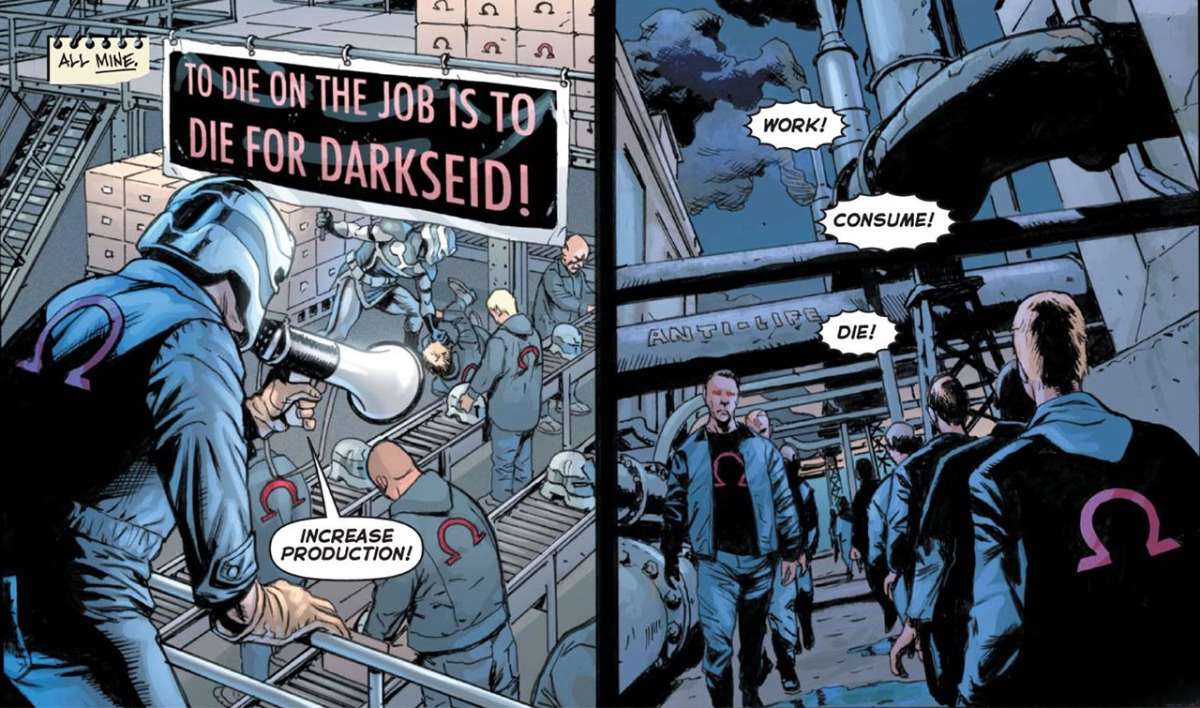
- Final Crisis #4: One month has passed since the Anti-Life Equation was released around the world. Millions now serve as slaves to Darkseid, while Apokolips’ Justifier troops ravage Earth and hunt down its last defenders.
- Final Crisis #5: The resistant struggle to keep fighting as they are relentlessly hunted down.
- Batman #682-683: Batman is held captive by Darseid’s henchmen, who want to use his memories to create a new army.
🦇These issues are working as a retrospective of Batman’s life. They could be skipped, but I recommend reading them as they prepare for Batman’s comeback and explain where he disappeared.
- Final Crisis #6: The End of Days has arrived, bringing with it the ultimate battle between good and evil.
- Final Crisis #7: An apocalyptic battle for the soul of humanity pushes the Crisis towards its conclusion.
Final Crisis Direct Aftermaths
The Crisis has ended, Darkseid and Mandrakk have been defeated.
- Superman/Batman #76: The issue starts right after FC #7 with Superman bringing Batman’s body home. However, the second half of the issue is set later and spoils the “Battle for the Cowl” storyline.
- Batman #702: Continuing the narrative of Batman #701, the issue covers what happened to Batman during the Crisis and sets the stage for “The Return of Bruce Wayne” storyline, which, ultimately, is the true epilogue of the event as it deals with the final trap Darkseid prepared for Batman and the other heroes.
- Final Crisis: Legion of Three Worlds #1-5: Before FC #6, Superman had an adventure with the Legion of Super-Heroes in the 31st century. I would guess that this was intended to be the one dealing with Superboy-Prime’s return, but the ending does not fit at all with the Crisis. It brings a couple of characters back from the dead, and their reunion with the present-day characters clearly does not take place during the event.
💡I did not place DC Universe: Last Will and Testament #1 in the guide as it doesn’t make any sense within the context of the event. Characters appear that are not supposed to be there, and events don’t fit within the overall narrative.
5. After the Crisis: Where to Go Next?
Following Final Crisis, DC Comics published four 6-issue “Final Crisis Aftermath” miniseries following supporting characters that played a part during the event:
- Final Crisis Aftermath: Dance: The continuing adventures of Japan’s team of youthful wannabe superheroes: The Super Young Team.
- Final Crisis Aftermath: RUN!: For having sided with Libra, The Human Flame is now the target of the heroes and the villains of the DC Universe.
- Final Crisis Aftermath: Ink: The Tattooed Man is considered a hero for the first time in his life. It’s not a change that comes without difficulties.
- Final Crisis Aftermath: Escape: The Global Peace Agency holds Nemesis captive in the mysterious Electric City, where members of the superhuman intelligence community are tortured in an attempt to extract secrets about the DCU’s heroes.
📂 The Next Case: Battle for the Cowl
The fallout of Final Crisis left a massive vacuum in the DC Universe. With Bruce Wayne gone, the question of his legacy became the primary focus of the Bat-Family. This is what Batman: Battle for the Cowl deals with: finding the new Batman. After that, Grant Morrison’s run continues the Batman & Robin series.
[Proceed to Next Case: Battle for the Cowl (Coming Soon)]