The Ultimate John Byrne Superman Reading Order (1986-1988)
John Byrne’s run on Superman wasn’t just limited to one book. It was a “Triangle Era” precursor where stories flowed between Superman, Action Comics, and Adventures of Superman (written by Marv Wolfman, but essential for context).
Here is the ultimate contextual reading order.
📂 Finding the Byrne Run in 2026
We are still waiting for a reprint of John Byrne’s Superman in Omnibus. For now, you can collect those comics in a hardcover collection (also available in Digital).
- Superman: The Man of Steel Vol. 1 – Collecting The Man of Steel #1-6, Superman #1-4, Adventures of Superman #424-428, and Action Comics #584-587.
- Superman: The Man of Steel Vol. 2 – Collecting Superman #5-11, Action Comics #588-593, Adventures in Superman #439-435, Legion of Super-Heroes #37-38, and profiles from Who’s Who: Update ’87.
- Superman: The Man of Steel Vol. 3 – Collecting Superman #12-15, Adventures of Superman #436-438, Action Comics #594-597, Superman: The Earth Stealers #1, Action Comics Annual #1, Superman Annual #1, Adventures of Superman Annual #1, and Booster Gold #23.
- Superman: The Man of Steel Vol. 4 – Collecting Doom Patrol #10, Superman #16-22, Adventures of Superman #439-444, Action Comics #598-600, and Superman Annual #2.
- It was also published in a 9-volume trade paperback collection.
- The Man of Steel miniseries was published in the Absolute collection.
- It’s also available digitally on DC Universe Infinite.
📂 The Complete John Byrne Superman Chronology
This is the introduction of Superman in the “New Earth” timeline. It strips away 50 years of history to start at zero. You don’t need to read anything before.
- The Man of Steel #1–6 (1986): The core miniseries.
- Superman (Vol. 2) #1: The formal launch of the monthly title. Superman Vs. Metallo, the introduction of the Kryptonite.
- Adventures of Superman #424: While written by Marv Wolfman, this issue introduces Cat Grant, Bill Henderson, and Lois Lane’s family (Ella, Lucy, and Sam).
- Adventures of Superman #425: conclusion to Bill Henderson’s story.
- Action Comics #584: The first issue of the team-up era. Superman Vs. The Titans.
- Superman (Vol. 2) #2: Lex Luthor goes after Clark Kent’s secret.
- Action Comics #585: Superman and the Phantom Stranger team up.
The Legends Crossover
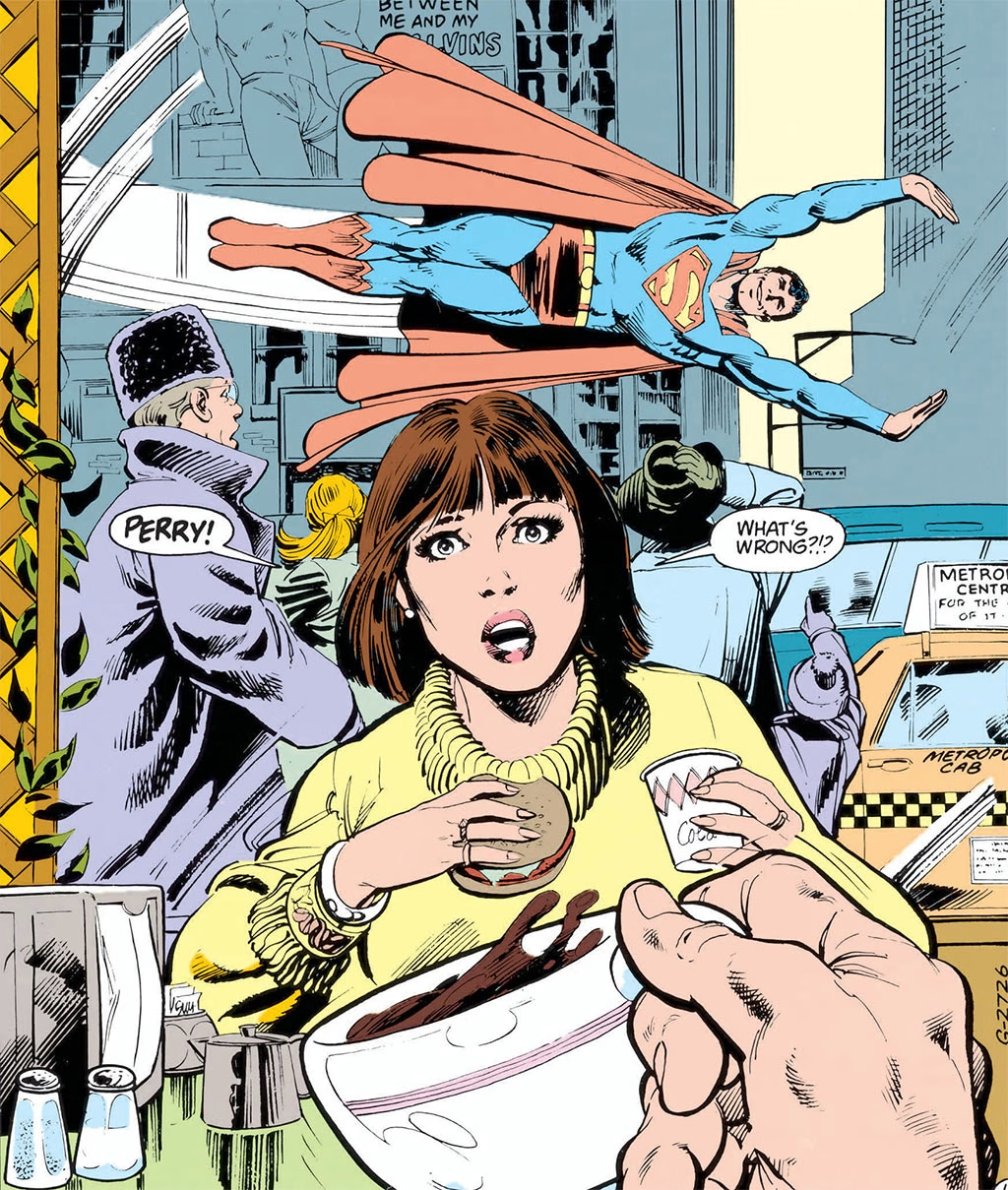
In late 1986/early 1987, DC ran its first major crossover event, Legends. Byrne’s Superman was a central figure here.
- Legends #1–4 (Crossover Event): This event is crucial because it deals with the public turning against superheroes. It explains why Superman is suddenly doubting his place in Metropolis.
- Superman (Vol. 2) #3: Legends part #17
- The Adventures of Superman #426: Legends part #18
- Action Comics #586: Legends part #19
- Legends #5-6
These are only the issues connected to Superman, check out our complete Legends Reading Order for everything else!
By late 1987, Byrne began reintroducing “Classic” villains (but with modern twists) and had Superman team up with more heroes.
- Superman (Vol. 2) #4: Bloodsport attacks Metropolis.
- The Adventures of Superman #427: Superman attacks Qurac.
- The Adventures of Superman #428: Perry White under fire.
- Action Comics #587: Superman and Etrigan The Demon.
- Superman (Vol. 2) #5-6: Lois and Clark are on an Archeology trip that turns bad.
- The Adventures of Superman #429: Learning about Cat Grant.
- Action Comics #588: This crossover issue takes place after Hawkman (1987) #10, but you don’t need to read it. At the end, the story continues for the Hawks in Hawkman (1987) #11, but for Superman, it’s in:
- Action Comics #589: After issue #588, Superman ends up meeting the Green Lantern Corps, and they team up to save Earth. It’s also a sort of conclusion of the story from issue #585.
- Superman (Vol. 2) #7: Superman deals with Rampage, a very strong lady.
- Adventures of Superman #430: Superman battles the Fearsome Five and identity problems.
- Action Comics #590: Superman and The Metal Men vs Chemo.
The next crossover is a follow-up to the Cosmic Boy miniseries (see Legends crossover), Superman and the Legion of Super-Heroes team up. It deals with the disappearance of Superboy from continuity post-Crisis.
- Legion of Super-Heroes #37/Superman (Vol. 2) #8/Action Comics #591/Legion of Super-Heroes #38
- Adventures of Superman #431: Climate change is a killer.
- Superman #9: Superman faces off with the Joker.
- Superman #10: Superman’s powers are out of control.
- Action Comics #592-593: The infamous Superman-Big Barda “sleezy” storyline.
- Adventures of Superman #432-434: Superman’s Gangwar storyline.
- Superman #11: Post-Crisis Mr. Mxyzptlk meets Superman.
- Adventures of Superman #435: The Circle returns.
- Action Comics Annual #1: Superman & Batman vs vampires.
- Superman Annual #1: The ever-growing monkey Titano unleashed in Metropolis.
- Adventures of Superman Annual #1: A small town mystery.
- Action Comics #594/Booster Gold #23: Robin meets Superman. Then, it’s Superman Day in Metropolis, and Booster Gold is not happy about that.
- Superman #12: A love story told in a flashback.
- Action Comics #595: Superman vs the Silver Banshee.
- The World of Krypton (1987) #1-4: John Byrne’s version of Krypton’s history that led to its destruction. This miniseries has been collected in Superman: The Many Worlds of Krypton.
The Millennium Event
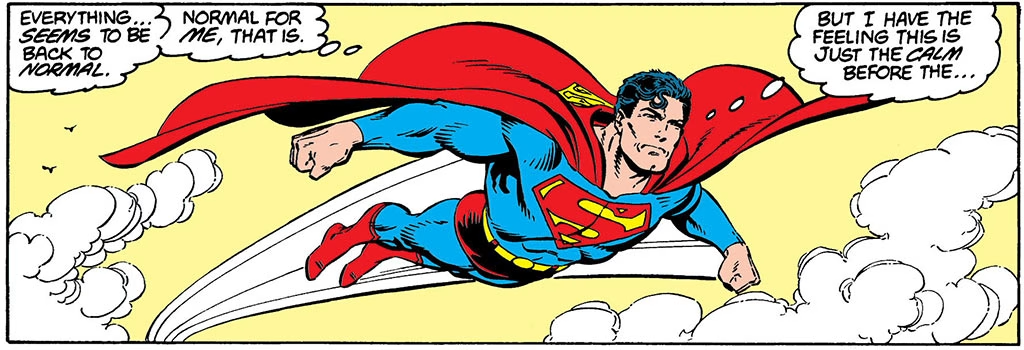
Published as an eight-issue weekly limited series between January and February 1988, the Millennium event was a massive undertaking at the time. It’s about the Guardians of the Universe looking to create new gods and the revelation that the ancient robotic Manhunters had secretly infiltrated Earth for centuries.
- Millennium #1/Superman (Vol. 2) #13/Adventures of Superman #436/Action Comics #596/Millennium #5/Justice League International #10/Millennium #6/Superman (Vol. 2) #14/Action Comics #/Millennium #7/Adventures of Superman #437
These are only the issues you need to read to follow Superman’s story. You can just go with the usual Superman series, they provide everything you need to know. Superman is not the main character of the event. Check out our Millennium Reading Order for everything else!
- Action Comics #597: Lois visits Smallville and discovers what happened during Millennium.
- World of Smallville #1-4: The story of Ma’ and Pa’ Kent’s marriage, and on Lana Lang and her link to the alien Manhunters. Referenced previous events, up to AC #597. It has never been collected, but it’s available digitally.
- World of Metropolis #1-4: A bit of backstory on the Daily Planet, Perry White, Lois Lane, Jimmy Olsen, and even Lex Luthor. It has never been collected, but it’s available digitally.
- Superman #15: Maggie Sawyer asks for Superman’s help to find her kid.
- Adventures of Superman #438: Clark, Cat, and Jimmy go to the circus and meet… Brainiac.
- Action Comics #598: Checkmate intervenes in Metropolis before the launch of the monthly series.
- Superman #16: The Prankster creates chaos in Metropolis.
- The Adventures of Superman #439: Superman ends up at the hospital while Jimmy needs saving.
- Action Comics #599: Superman and the Metal Men vs the Kryptonoid Man.
- Superman #17: The return of the Silver Banshee.
- Superman: The Earth Stealers #1: A one-shot by Byrne and artist Curt Swan, Superman must save the planet from a group of Aliens.
- The Adventures of Superman #440: Superman is on his way to meet with Wonder Woman, but problems arise on the road. The meeting was set up in Wonder Woman (1987) #16.
- Superman Annual #2: A short Maggie Sawyer story.
- Action Comics #600: 50th Anniversary Issue. Superman meets Wonder Woman, fights Darkseid, and more.
- Superman #18: Return to Krypton!
- The Adventures of Superman #441: Mr. Mxyzptlk returns.
- Superman #19: Superman is losing his powers. Part 1.
- The Adventures of Superman #442: Superman is losing his powers. Part 2.
- Doom Patrol #10: Metallo is back.
- Superman #20: Superman joins the fight to stop Metallo
- The Adventures of Superman #443: Clark and Jimmy look for an abducted journalist.
- Superman #21/The Adventures of Superman #444/Superman #22: The Supergirl Saga.
After the Byrne Era: What to Read Next?
After completing the Supergirl Saga, John Byrne quit.
Action Comics became Action Comics Weekly starting with issue #601. It was not a Superman book anymore, but an anthology featuring, at first, Superman, Green Lantern, Blackhawk, Deadman, Secret Six, and Wild Dog. Those stories are collected in Superman: The Power Within.
At that point, Jerry Ordway had become the main writer and penciller on The Adventures of Superman. Roger Stern took over for John Byrne on Superman. They dealt with the Invasion! crossover before sending Superman into exile. Their stories are collected in Superman: Exile and Other Stories Omnibus.
📂 DC Casebook: The Byrne Superman Trilogy:
- Part 1: The History & Legacy of the 1986 Reboot
- Part 2: Critical Review: Does Byrne’s Superman Hold Up?
- Part 3: The Complete Reading Order