
Resurrection of Ra’s al Ghul Reading Order: The Complete Guide for The Battle for the Heir
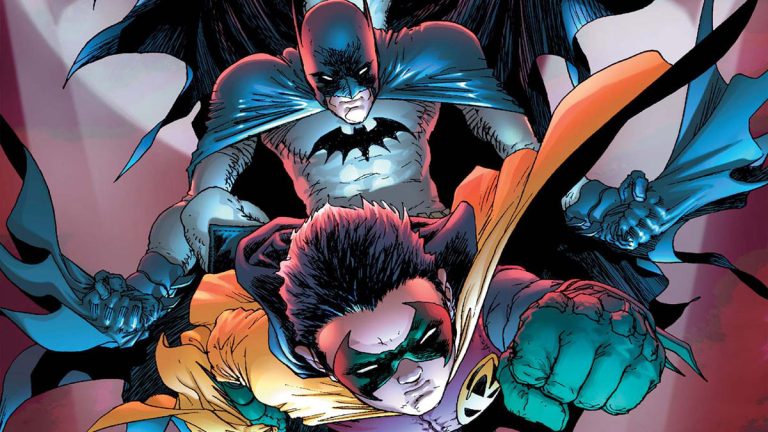
When Grant Morrison started writing his celebrated seven-year run on Batman, his first major contribution to the lore was the introduction of Damian Wayne, son of Bruce Wayne and Talia Al Ghul. He didn’t take long for DC Comics to put the boy at the center of a crossover event leading to The Resurrection of Ra’s al Ghul!
The Ghul family made a big comeback, as dangerous as ever, and young Damian is to play a key role in bringing his grandfather fully back from the dead. But he is not easily controlled and will not just bend the knee when he has another side of the family ready to fight for him. Well, maybe not that ready, but Batman’s sons will never let someone die if they can save them.
As the whole story spans across Batman, Detective Comics, Nightwing, and Robin, this is not a storyline entirely written by Grant Morrison. Peter Milligan, Paul Dini, Fabian Nicieza, and Keith Champagne also wrote one or more chapters, with artists Tony S. Daniel, Ryan Benjamin, Freddie Williams II, Don Kramer, David López, David Baldeón, and Derec Donovan.
- Historical Context
- A Short Review
- Collecting the Resurrection of Ra’s al Ghul in 2026
- Full Reading Order
- After the Event
1. The Resurrection Event: The Hunt for a Host
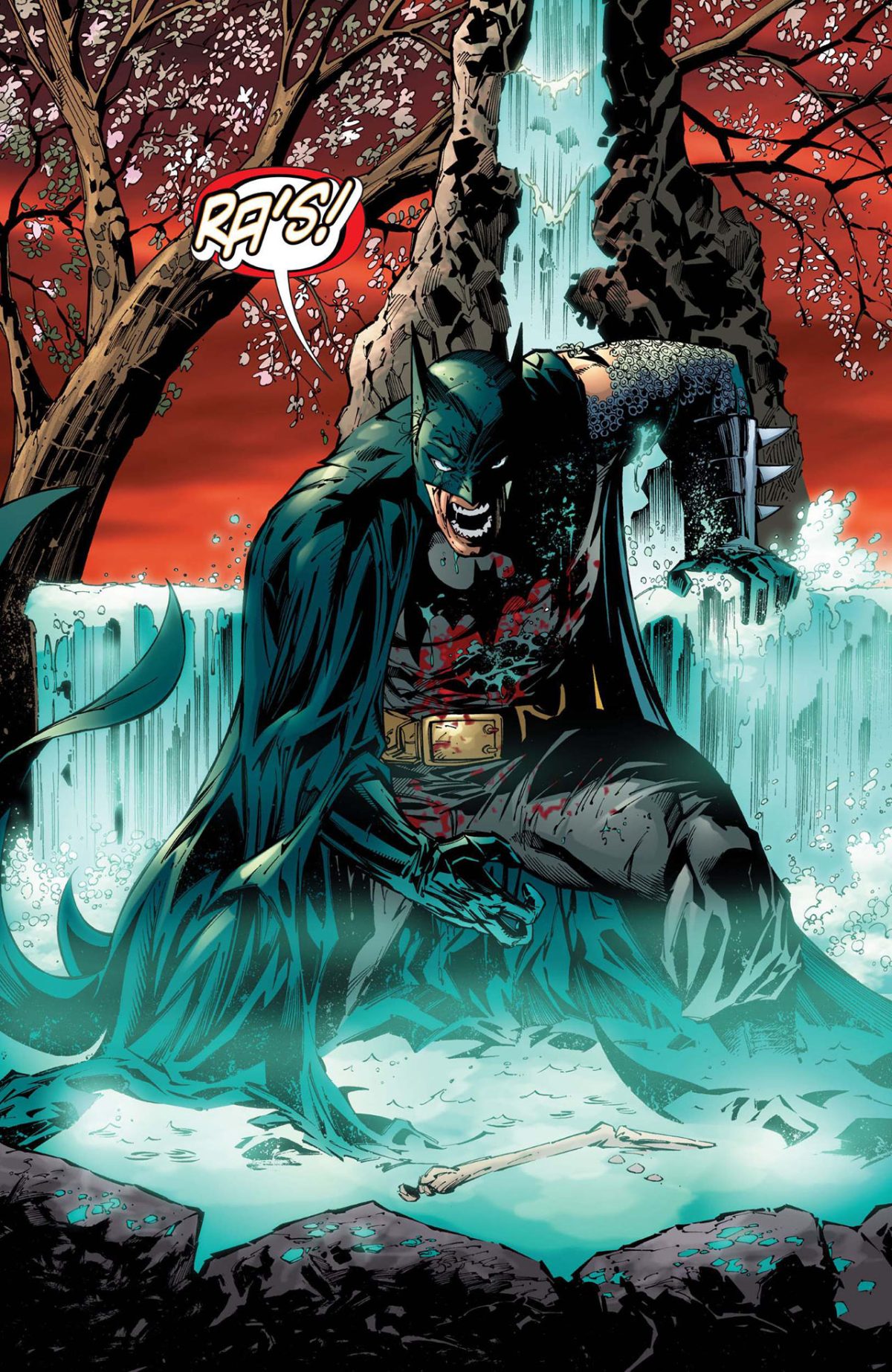
Ra’s al Ghul had been “dead” since the events of Death and the Maidens, a 2004 limited series by Greg Rucka and Klaus Janson. He was believed dead for good, but nothing can keep the Demon from coming back. Except for one thing: he needs a host. His body is gone, and he needs a new one. One genetically compatible host that can tolerate his spirit without rapidly deteriorating. He needs the body of a family member. That’s why his grandson, Damian Wayne, was engineered.
Once Ra’s has taken over Damian’s body, the boy will simply cease to exist. But Damian is not one to go without a fight, and he needs to get his father’s help if he wants to survive. If someone can stop the leader of the League of Assassins, it’s Batman.
Batman and his family (Nightwing, Robin, and Alfred) are not the only ones working to stop Ra’s. It’s also a fight to get control of the League. Old allies are fomenting a coup to stop the resurrection, while Talia is stuck between her father and her son.
Key Historical Elements:
- The Trial of the Heir: This event is the first time Damian Wayne is forced to reject his mother’s world. It marks his transition from a “weapon” of the League to a member of the Bat-Family.
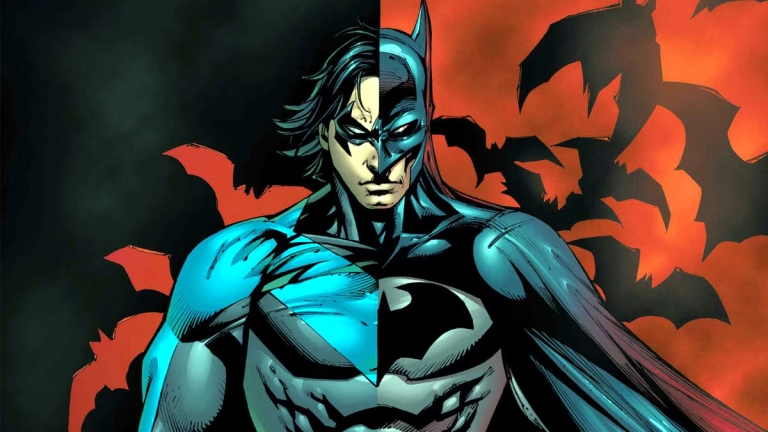
- The Batman Legacy: One of Morrison’s themes during his run is the legacy of the bat. This event ties into it by having Damian, Tim, and Dick all forced to deal with the ideological choices their father, adopted or biological, made.
- The Tim Drake/Damian Rivalry: The crossover leaned heavily into the friction between the current Robin (Tim) and the blood-son (Damian), a conflict that would define the next five years of Bat-history.
- Tim’s grief: Tim has lost family and friends. The event deals with the effect that accumulating so many losses has on him, as Ra’s may have the key to bring everyone back. Tim has to fight to move on.
- The Immortal Return: It successfully reestablishes Ra’s al Ghul as a high-level adversary. It also set up a new fragmented power structure in the League of Assassins.
- The International Scope: Grant Morrison’s run developed the international scope of Batman’s operation, and the event played with that concept, steering the action away from Gotham to Nanda Parbat.
2. A Short Review: The Demon’s Mid-Life Crisis
The Resurrection of Ra’s al Ghul is not a big crossover event, with seven core issues. There is nothing to set aside, as every chapter moves the story forward. Despite that, this one feels to me disjointed at times, with Batman on one side and his sons on the other.
For Tim Drake, I think it offers solid developments, and Nightwing plays a strong role as the big brother, providing action and moral support. Damian is still much of a free agent, but eventually shows he can make good choices when the moment arises. And Batman in all of this? He mostly follows his own path. He may trust his sons to do the work, but the way the event is structured isolates the Dark Knight on a narrative level, making the event unfocused.
In Batman by Grant Morrison Omnibus Volume 1, only the Batman issues are collected, with the addition of two pages to explain what happened. If you really are only into the Bat, it’s almost enough, and this highlights for me how the whole story fails as a crossover event. There was not much to support this narrative structure. I would not say it’s bad, as it’s full of action, and it moves at a good pace, but I think it lacked a cohesive vision to make it feel truly epic. As it is, it’s a bit unremarkable.
3. Collecting the Resurrection of Ra’s al Ghul in 2026
While you can find the Batman tie-in issues in Batman by Grant Morrison Omnibus Vol. 1, the only way to read the full event is to get the trade paperback dedicated to the event, and it is reprinted in 2026.
- The Resurrection of Ra’s al Ghul (Trade Paperback) – Collects Batman #670–671, Robin #168–169, Detective Comics #838–839, Nightwing #138–139, Batman Annual #26, and Robin Annual #7.
- It’s also available digitally on DC Universe Infinite.
4. The Complete Reading Order
This crossover is strictly chronological. Unlike bigger and more editorially ambitious events, the tie-ins are all adding to the main plot. I recommend not skipping any of them.
Before reading the Resurrection of Ra’s al Ghul, you need to be up-to-date on Batman, Damian, and Tim’s situation. Read the trade paperback Batman and Son (collects Batman #655-658 and #663-666). For more details, I invite you to check out my Complete Grant Morrison Batman Reading Order.
The Prologue
Batman #670 is the one you must not skip, but the two annuals add context. If you are not familiar with Ra’s Al Ghul, Batman Annual #26 will catch you up.
- Batman Annual #26: Talia recounts Ra’s Al Ghul’s life to Damian to prepare him for a ritual organised by her father’s right-hand man, White Ghost. By Peter Milligan.
- Robin Vol. 4 Annual #7: On the island of Cheung Chau, Damian is drugged and wakes up in a cemetery full of ghosts. By Keith Champagne.
- Batman #670 (Prelude): A war to control the league takes shape as Ra’s Al Ghul comes back to life. By Grant Morrison.
The Main Crossover
- Robin #168: Part 1 – Damian is on the run, destination: The Bat Cave. By Peter Milligan.
- Nightwing #138: Part 2 – Nightwing joins the fight to save Damian. By Fabian Nicieza.
- Detective Comics #838: Part 3 – Batman and Talia are on their way to Ra’s Al Ghul’s hideout. By Paul Dini.
- Batman #671: Part 4 – To save his sons, Batman makes a deal. By Grant Morrison.
- Robin #169: Part 5 – Tim is contemplating a way to bring back the dead. By Peter Milligan.
- Nightwing #139: Part 6 – Dick has to fight to save Tim. By Fabian Nicieza.
- Detective Comics #839: Part 7 – In Nanda Parbat, time for the last battle. By Paul Dini.
The Epilogue
- Detective Comics #840: What happened to Ra’s after his last fight against Batman, revealing his new status quo. By Paul Dini.
5. After the Resurrection: Where to Go Next?
Once the event came to an end, and Paul Dini delivered his epilogue in Detective Comics #840, Nightwing dealt with Talia in his own series, in Nightwing #140-146 (collected in Nightwing by Peter J. Tomasi).
As for Batman, he has to deal with another menace:
- The Black Glove: Follow the mystery of the “Club of Heroes” and the secret organization targeting Batman’s sanity.
- More on that in my Complete Grant Morrison Batman Reading Order.
📂 The Next Case: Batman R.I.P.
If Resurrection of Ra’s al Ghul was a battle for Batman’s legacy, the next case is a battle for his very mind. In Batman R.I.P., we see what happens when the “Black Casebook” finally catches up to the Dark Knight…
[Proceed to Next Case: Batman R.I.P]