
Countdown to Final Crisis Reading Order: The Year the Multiverse Fractured
Published between 2007 and 2008 by DC Comics, Countdown to Final Crisis was designed as the weekly lead-in to Final Crisis, following in the publishing model established by 52. Running for 51 issues, the series attempted to lay the groundwork for the next major crisis in the DC Universe while following multiple parallel storylines involving cosmic threats, multiversal instability, and several major DC characters.
Things didn’t turn out as well as with 52. It was a massive editorial blunder. As Grant Morrison explained it at the time: “Final Crisis was partly-written and broken down into rough issue-by-issue plots before Countdown was even conceived, let alone written.” But despite that, the writing led by Paul Dini seems to lack enough details to not contradict what would eventually happen in Final Crisis. As a result, plotlines in Countdown had diverged so much that continuity between the two publishing initiatives became partly nonsensical. Some elements complement Final Crisis and add a greater understanding of the end story, but most do the opposite. Characters who died end up alive (and are killed again), and whole storylines are redone in Final Crisis, and the overall tone doesn’t fit. If you add to that Death of the New Gods by Jim Starlin, to which Countdown began to respond before veering away from it, the confusion became maddening.
Today, Countdown to Final Crisis is a complicated affair to deal with for readers. If you are a completist, you can’t skip it. Idem if you are trying to follow some secondary characters. Ultimately, this is widely considered to be non-canonical.
To reiterate, hopefully for the last time, when we started work on Final Crisis, J.G. and I had no idea what was going to happen in Countdown or Death Of The New Gods because neither of those books existed at that point. The Countdown writers were later asked to ‘seed’ material from Final Crisis and in some cases, probably due to the pressure of filling the pages of a weekly book, that seeding amounted to entire plotlines veering off in directions I had never envisaged, anticipated or planned for in Final Crisis.
Grant Morrison (Grant Morrison on Final Crisis #1, 2008)
Table of Contents
- Historical Context: The Road Not Taken
- A Short Review
- Collecting Countdown in 2026
- Full Reading Order
- When the Countdown Reached Zero: Time of Crisis
1. The Road Not Taken: What was Countdown?
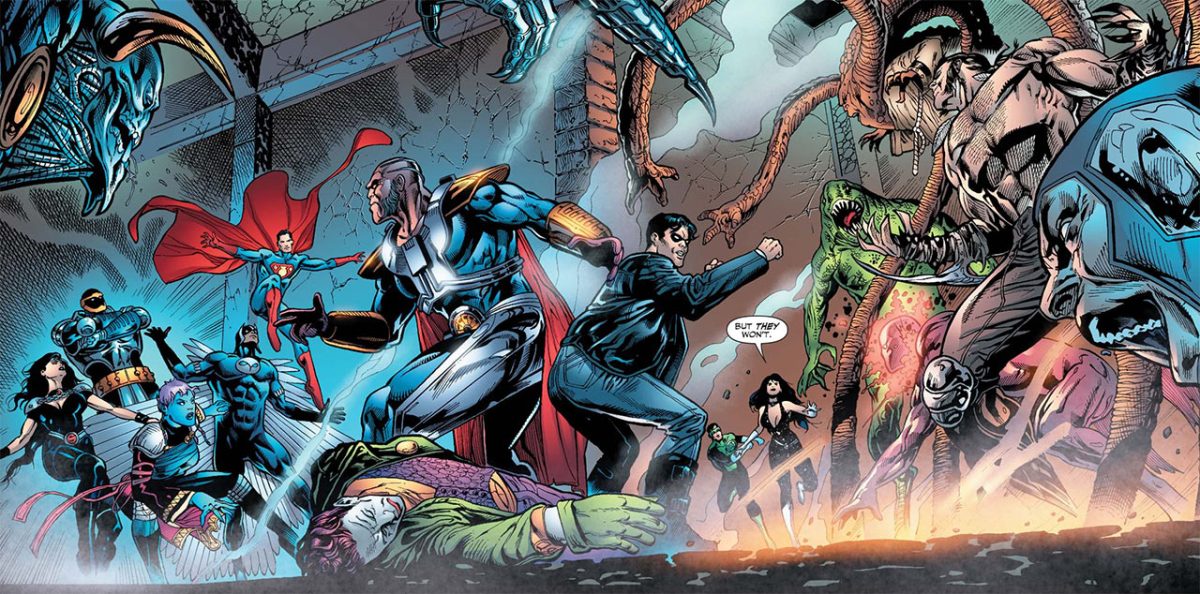
Picking up immediately after the conclusion of 52, Countdown was designed to count downward from issue #51 to #0 (it stopped at #1 with DC Universe #0 retconning most of it immediately). It was intended to be the “spine” of the DC Universe for the year 2007-2008, merging cosmic mythology, multiverse exploration, and character-driven subplots into a sprawling lead-up to Final Crisis.
📂 Key Storylines:
- The Monitor Schism: The introduction of the 52 Monitors and the internal politics that would eventually lead to the cosmic vampirism seen in Final Crisis.
- The Search for Ray Palmer: Much of the series involves a “Challengers from Beyond” team (Donna Troy, Jason Todd, Kyle Rayner, and a Monitor) traveling the Multiverse to find the Atom, who holds the key to surviving the coming storm.
- The Corruption of Mary Marvel: A controversial arc that saw the purest member of the Marvel Family descend into darkness after receiving the powers of Black Adam.
- The Fury of the Amazons: Holly Robinson and Harley Quinn join a women’s shelter under the Greek Goddess Athena’s protection and start getting swept up in a conspiracy that touches the Amazons.
- Jimmy Olsen’s Transformation: Superman’s pal begins manifesting bizarre powers (the “Mr. Action” arc), serving as a central, if confusing, narrative thread.
- Death of the New Gods: Closely linked to Jimmy Olsen and Mary Marvel’s storylines, the systematic destruction of the New Gods across the Fourth World ties the whole series together.
- The Dying Legionnaire: Member of the Legion of Super-Heroes, Karate Kid, is dying, and with the help of Una (Triplicate Girl), tries to find a cure.
- Rogues on the Road: Trickster and Pied Piper went back to being Rogues, but things turn bad quickly, and they have to run for their lives with the Suicide Squad on their tail.
2. A Short Countdown to Final Crisis Review
It would be easy to completely dismiss Countdown to Final Crisis as a failure. In many ways, it is. But it’s also too simple not to look further than that. I think that when talking about Countdown, context is key.
Is it worth it to read Countdown before Final Crisis?
No. You don’t need to do this. It’s an editorial nightmare that makes reading Final Crisis even more confusing than it already is because of all the contradictory elements the series puts in your head. At least, it was for me.
While reading Final Crisis, I was continuously referring in my head to facts that were not canonically true anymore. It helped me make more sense of the Mary Marvel situation until events shattered the illusion of understanding. And that’s how it played out for me. I read the crossover events and drew connections to Countdown, but then something contradicts them. But if you read The Death of the New Gods by Jim Starlin at the same time as Countdown, you already had an idea of what was to come.
So, in the context of Final Crisis, yes, Countdown is a failure.
Separately from Final Crisis, is reading Countdown worth it?
If you take Countdown to Final Crisis independently from the rest, you take away the main argument against it. And in that context, I would not be as harsh with it, but I would not praise it either. Compared to 52, I found it lacking truly gripping characters to keep me motivated. Sure, Jimmy Olsen has his moments, Donna Troy too. I found the Holly Robinson and Harley Quinn team-up to be fun, as they really act like supporting characters in a story that is way too big for them. But the ballad of Trickster and Pied Piper got old pretty quickly. Jason Todd was a caricature. Mary Marvel was a problem on another level. I cannot get myself to care for what was happening to Karate Kid and Una. Combined, everything felt overstretched, and the payoffs were mostly unsatisfactory.
What Countdown achieved, though, was maintaining the cosmic scale of the story. It felt like something big was really happening, but we were stuck with the C and D team. The writing of the issues was not bad. It reads at a good pace, juggling all the story threads pretty smoothly in a way that makes it impossible to get too bothered with the weakest links. The art was also relatively good, not a lot to celebrate, but solid panel breakdowns and nice pencils overall.
In the end, I knew not to expect a lot from Countdown to Final Crisis, but I was still expecting it to generate some of the enthusiasm that I got out of reading 52. I didn’t get it. With so many issues, I don’t encourage casual readers to try to go through it. I would say it’s for fans who already have connections to some of the characters and want to experience it. You have to come to it with motivation.
3. Collecting Countdown to Final Crisis in 2026
Collecting Countdown to Final Crisis today, in a trade paperback collection, may not be easy for everybody. The main trades have become harder to find. Still, everything is available in Digital.
- It’s also available digitally on DC Universe Infinite and Comixology/Kindle.
- Countdown to Final Crisis Vol. 1 – Collecting Countdown to Final Crisis #51-39.
- Countdown to Final Crisis Vol. 2 – Collecting Countdown to Final Crisis #38-26.
- Countdown to Final Crisis Vol. 3 – Collecting Countdown to Final Crisis #25-13.
- Countdown to Final Crisis Vol. 4 – Collecting Countdown to Final Crisis #12-1.
Collecting the tie-in miniseries
- Countdown Presents: The Search for Ray Palmer – Collecting Countdown Search for Ray Palmer: Wildstorm (2007), Crime Society (2007), Red Rain (2007), Gotham by Gaslight (2008), Red Son (2007), Superwoman/Batwoman (2008). Also on DC Universe Infinite.
- Countdown to Adventure – Collecting Countdown to Adventure #1-8. Also on DC Universe Infinite and Kindle.
- Countdown Arena – Collecting Countdown Arena #1-4. Also on DC Universe Infinite and Kindle.
- Countdown: Lord Havok and the Extremists – Collecting Countdown Presents: Lord Havok and the Extremists #1-6. Also on DC Universe Infinite and Kindle.
- Fate: Countdown to Mystery – Collecting Countdown to Mystery #1-8. Also on DC Universe Infinite and Kindle.
- Death of the New Gods – Collecting The Death of the New Gods #1-8. Also on DC Universe Infinite and Kindle.
- JLA: Salvation Run – Collecting Salvation Run #1-7. Also on DC Universe Infinite and Kindle.
4. The Complete Countdown Reading Order
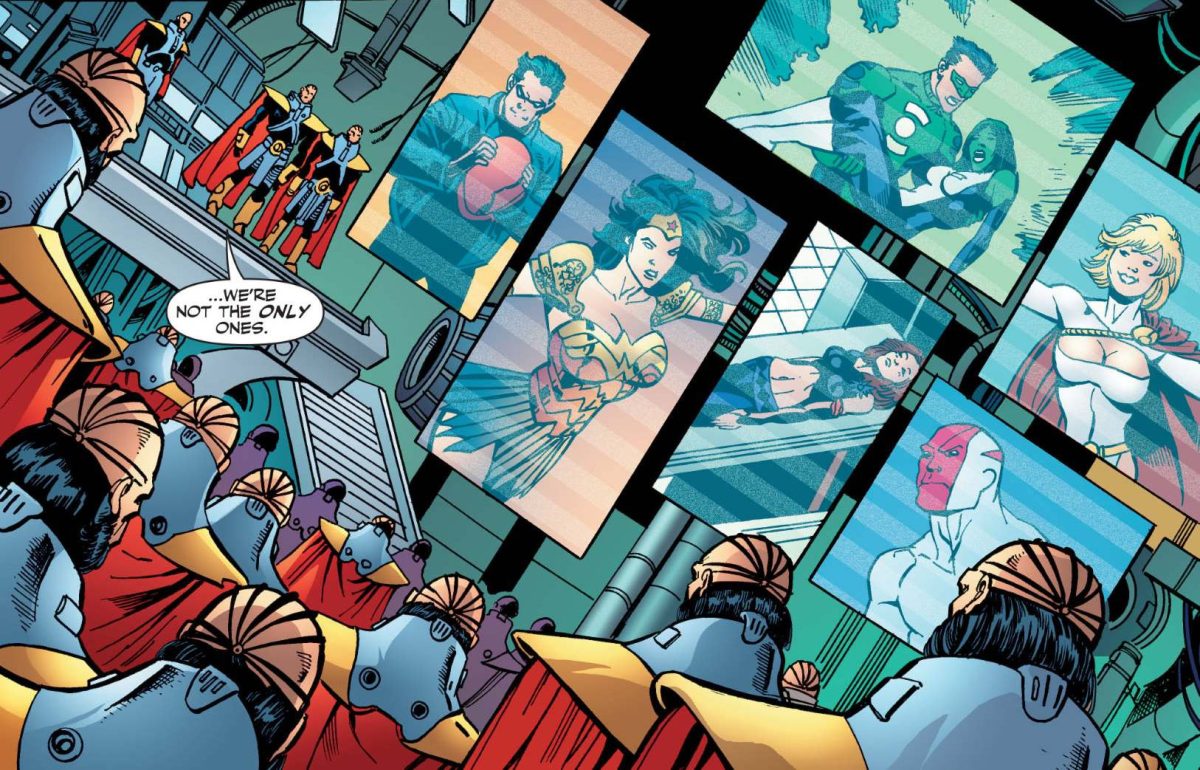
Because Countdown was a weekly series, it is best read in blocks. For the DC Casebook, I’ve integrated the essential “Side-Cases” that actually matter to the finale.
Do I need to read the tie-in miniseries? No. Most of them add nothing impactful. Some create confusion, others are barely connected at all to the main story.
💡The idea behind the Countdown is that the issues are numbered in reverse order, like a countdown.
- Countdown #51-48
- The Death of the New Gods #1
📋The Death of the New Gods by Jim Starlin is another editorial mishap. I placed the first two issues in the guide, but after that, it became hard to keep linking the 8-part miniseries to Countdown, despite the fact that they were originally supposed to complete each other. Reading it creates confusion.
- Countdown #47: The issue is set at the beginning of the Amazon Attacks! storyline.
- Countdown #46-45
⚡Flash: The Fastest Man Alive: Full Throttle (The Flash: The Fastest Man Alive #9-13) by Marc Guggenheim and Tony S. Daniel is a key storyline that has a notable impact on Countdown. It’s an optional book to read, just know that it deals with the Rogues attacking and killing The Flash (Bart Allen).
- Countdown #44-43
- Countdown to Adventure #1
📋Countdown to Adventure is a follow-up to 52, continuing Adam Strange’s story with Animal Man and Starfire. It’s not linked to Countdown, unlike the backstory by Justin Gray and Fabrizio Fiorentino that focused on the character of Forerunner, introduced in Countdown #46. The story chronicles her origin as well as her relationship to Monarch.
- Countdown #42-41
- The Death of the New Gods #2
- Countdown #40-33
- Countdown Presents: The Search For Ray Palmer – Wildstorm #1 (One-Shot)*
- Countdown #32: Events set during Justice League of America Wedding Special #1.
- Countdown Presents: The Search for Ray Palmer – Red Son #1 (One-Shot)*
- Countdown #31
- Countdown Presents: The Search For Ray Palmer – Crime Society #1 (One-Shot)*
- Countdown to Adventure #2
- Green Arrow and Black Canary Wedding Special (2007) #1 (for context)
- Countdown #30
- Countdown Presents: Lord Havok and the Extremists #1-2
📋Lord Havok and the Extremists by Frank Tieri and Liam Sharp is a six-issue miniseries dealing with the events that led Lord Havok and The Extremists to join Monarch’s army.
- Countdown #29
- Countdown Presents: Lord Havok and the Extremists #3-6: To avoid spoilers, note that the last 3 pages of issue #6 are making a jump ahead, depicting events set after Countdown #13.
- Countdown #28-26
- Countdown Presents: The Search For Ray Palmer – Red Rain #1 (One-Shot)*
- Countdown #25-24
- Countdown Presents: The Search For Ray Palmer – Gotham by Gaslight #1 (One-Shot)*
- Salvation Run #1-7
📋Salvation Run by Bill Willingham, Lilah Sturges, and Sean Chen is connected to the Trickster and Pied Piper story, but doesn’t involve characters from Countdown. It starts with Amanda Waller and Rick Flag, who, through Checkmate and the Suicide Squad, put in motion a plan to send all of the world’s most harmful super villains off planet.
- Countdown #23-20
- Countdown to Adventure #3-4
- Countdown Arena #1-4
📋Countdown Arena by Keith Champagne and Scott McDaniel is a 4-issue miniseries in which Monarch captures super-heroes from the multiverse and forces them to fight to help him choose who i’ll keep in his army in preparation for his battle against the Monitors.
- Countdown #19
- Countdown Presents: The Search For Ray Palmer – Superwoman / Batwoman #1 (One-Shot)*
*These one-shots have been collected under the title “The Search for Ray Palmer.”
- Countdown #18-17
- Countdown to Mystery #1-8
📋Countdown to Mystery main series about Dr. Fate is, like Countdown to Adventure, not directly linked to the Countdown series, but the backstory is. Coming from Matthex Sturges and Stephen Jorge Segovia, it focuses on the actions of Eclipso and the new Spectre, Crispus Allen. The middle part crosses at that point with the Mary Marvel story.
- Countdown #16
- Countdown to Adventure #5-7
- Countdown #15-1
5. When the Countdown Reached Zero: Time of Crisis
Countdown to Final Crisis never reached issue #0. Instead, DC Universe #0 was released, co-written by Grant Morrison and Geoff Johns. This issue provided a rundown of recent events in the DC Universe, with the aim of attracting new readers before the launch of the Final Crisis limited series.
📂 The Next Case: Final Crisis
The countdown is over. The gods are dead. The Equation is ready.
[Proceed to Next Case: Final Crisis]