Batman R.I.P. Reading Order: The Batman of Zur-En-Arrh Rises
Following the world-spanning quest of The Resurrection of Ra’s al Ghul, Batman faced a threat in Gotham that didn’t target his body or his family, but his very sanity. Batman R.I.P. is the downfall of Batman. It is the moment where every reference in the Black Casebook (the aliens, the hallucinations, the bizarre transformations) is revealed to be part of a singular, sinister conspiracy.
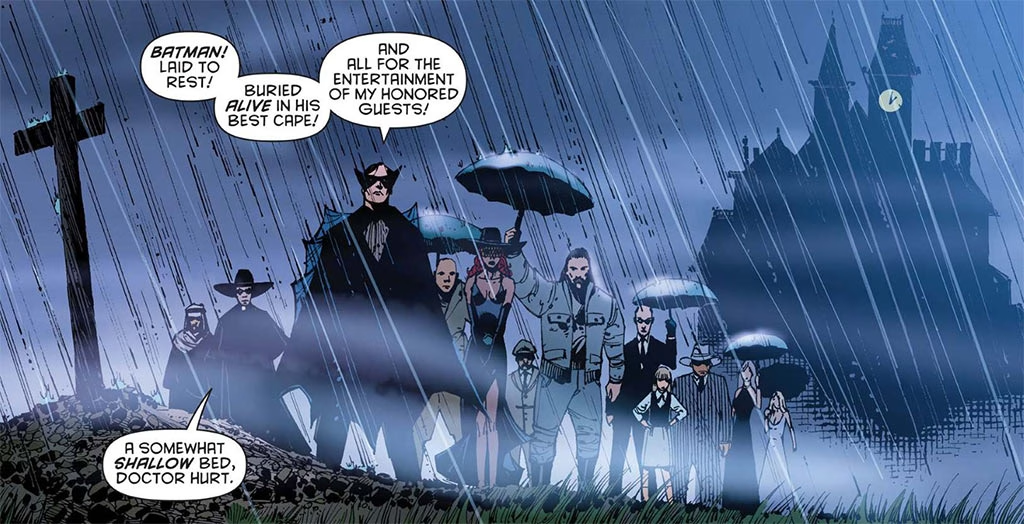
The “Black Glove,” a secret society of the world’s wealthiest and most depraved individuals led by the mysterious Doctor Hurt, wages a war of “total weaponized trauma” against Bruce Wayne. Their goal? Not to kill Batman, but to prove that he can be broken into something pathetic, insane, and common.
- What is this about?
- A Short Review
- Collecting Batman R.I.P. in 2026
- Full Reading Order
- The Aftermath
📂 The Core Event: The Black Glove’s Gambit
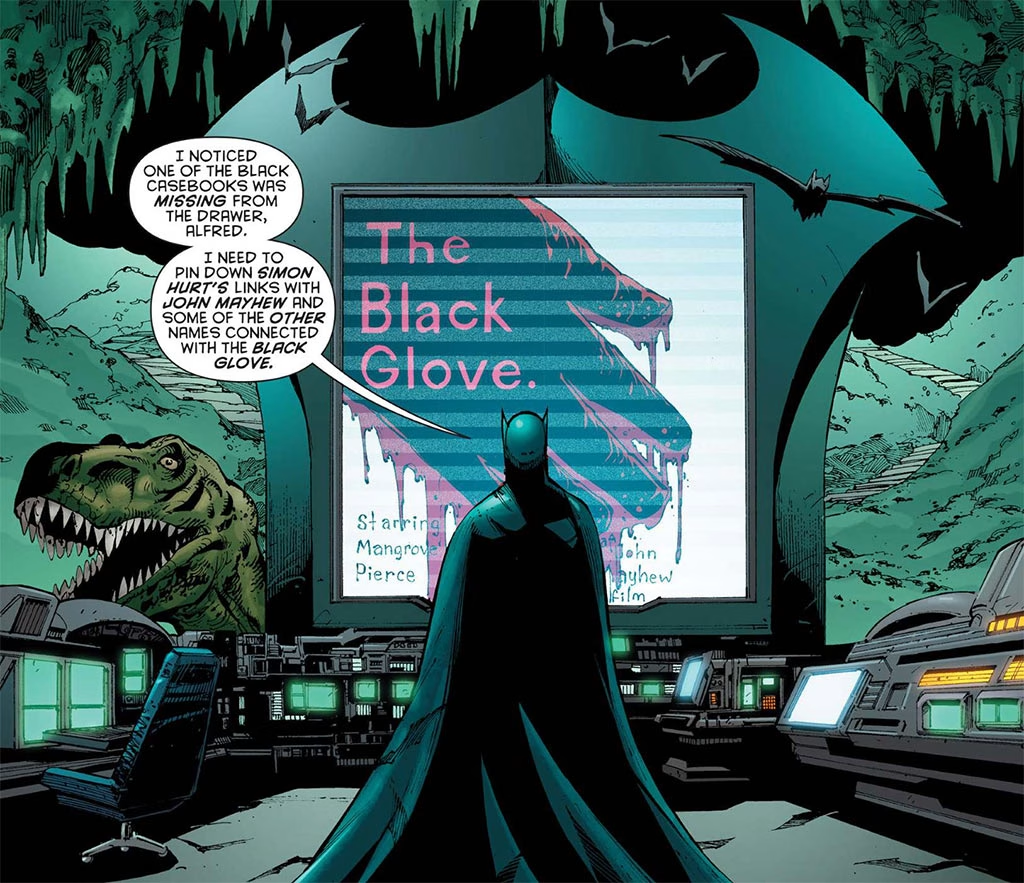
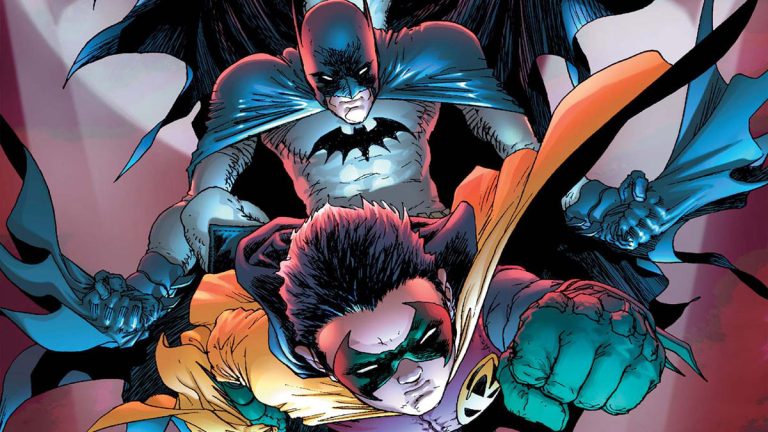
A culmination of the first part of Grant Morrison’s epic Batman run, leading right into the Final Crisis, Batman R.I.P. is a descent into madness. Dr. Hurt uses a post-hypnotic trigger word (“Zur-En-Arrh”) to shut down Bruce Wayne’s mind. What the Black Glove didn’t count on was that Batman had prepared a “Back-up Personality” for just such an occasion.
Now, the legacy of the Wayne name and the mental survival of Bruce Wayne are on the line. Will Batman be able to find his way back to sanity in time for his fight against Joker and the Black Glove, or will he fall?
Key Story Elements:
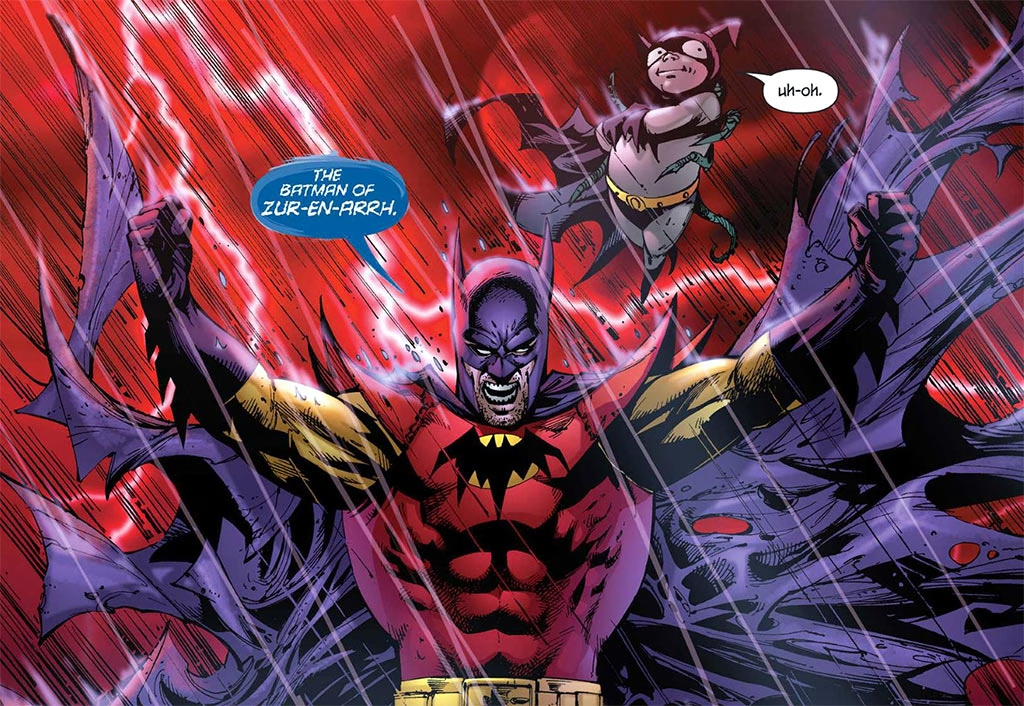
- The Back-up Identity: The introduction of the Batman of Zur-En-Arrh, the garishly colored, hyper-violent version of Batman that exists only if Bruce Wayne’s mind is compromised.
- The Black Casebook: This was Morrison’s big idea, taking the “silly” stories of the 1950s and 1960s and recontextualizing them as psychological experiments or repressed memories, turning 70 years of history into a singular story.
2. A Short Review: The Deconstruction of Bruce Wayne
Grant Morrison made a career at DC Comics with now classic runs, modernizing old characters. His love for Silver Age comics always added a notable touch of eccentricity, but it was done seriously. In someone else’s hands, the colored madness of Zur-En-Arrh, assisted by Bat-mite, would probably feel like a ludicrous idea. But Batman R.I.P. is a serious tale that grounds the silliness of old times into a narrative that fuels a psychological deconstruction of Bruce Wayne.
It’s about Bruce Wayne and Batman, and what makes them work together. If you take the man away, what is left? When Jezebel Jet visits the Bat-cave and delivers the classic critiques against “Batman” made by people who are not too familiar with the character (why not use the money to do good? Maybe it’s time to grow up?), Morrison set the stage to prove that Batman is not just the toys and the trauma, he is the mission, the dedication to the cause, the perfectionist who prepares for every possible outcome. Bruce Wayne is not a kid playing dress-up because he can’t outgrow his parents’ death. He is one mind dedicated to saving other parents from leaving orphans behind. He is a comic book hero shaped by a long, varied history with one strong, simple, relatable concept at its core.
Batman R.I.P. is a great story because it’s about what Bruce Wayne is made of. It’s not about the artifice, the “money,” or the trauma. It’s about what a great comic book character he is. Pushed to the limits of ridiculousness and gritty violence, Batman just works. As an idea, it can’t be killed.
3. Collecting Batman R.I.P. in 2026
Batman: R.I.P. by Grant Morrison and Tony S. Daniel is a popular storyline that DC Comics reprinted in multiple formats. All collect Batman #676-683.
- Batman R.I.P. (New 2026 Paperback Edition)
- Batman: R.I.P. by Grant Morrison and Tony S. Daniel: Absolute Edition – Oversized hardcover.
- Batman by Grant Morrison Omnibus Vol. 1 – Hardcover collecting Batman #655-658, #663-683, and more.
- Batman R.I.P. Unwrapped – This deluxe-edition graphic novel presents Daniel’s black and white pencil artwork.
- It’s also available digitally on DC Universe Infinite and Kindle.
4. The Complete Reading Order
Unlike larger events, R.I.P. is a tight, focused spiral. The “Tie-ins” in Detective Comics run parallel to the main story, showing what the rest of the Bat-Family was doing while Bruce was missing.
The Prelude: The Black Glove
I published a Complete Grant Morrison Batman Reading Order that will give you more details about those stories.
- Batman #667–669: The “Club of Heroes” arc, where Batman first encounters the organization.
- Batman #672–675: The “Space Monster” hallucinations and the first mention of Zur-En-Arrh.
📋Detective Comics #846-850: “Heart of Hush” by Paul Dini and Dustin Nguyen is the return of Tommy “Hush” Elliott, who wants to get his revenge before the Black Glove can take it away from him. It’s often presented as a parallel story to Batman R.I.P., but it’s set just before. It’s optional as it does not add anything to the plot.
The Main Event: Batman R.I.P.
You can just read Batman #676–681. This is the main storyline. At the time, DC Comics published tie-ins. You can skip the Nightwing ones as they only reference Bruce’s status. Robin‘s tie-ins complement the main plot, following Tim as he looks for Batman after his disappearance.
- DC Universe #0 (three-page prelude): Batman meets Joker for a card reading.
- Batman #676: Batman’s obsession with the Black Glove seems to be founded.
- Nightwing #147-150: Harvey Dent asks Nightwing to protect an old lover of his. Things turn violent quickly. Collected in Nightwing: The Great Leap.
- Batman #677: As Bruce’s own sanity is put into question, the Black Glove attacks.
- Robin #175: Following Batman’s sudden disappearance, Robin and Spoilers are searching for him. Collected in Robin: Search for a Hero.
- Batman #678: The Batman of Zur-En-Arrh appears.
- Robin #176: Robin and Spoiler keep looking for Batman, but the Black Glove comes after them.
- Batman #679: Batman makes his way towards his enemies.
- Batman #680: Time to face the Joker.
- Batman #681: The final confrontation.
🗂️R.I.P. – The Missing Chapters
Less than two years later, Grant Morrison and Tony S. Daniel went back to Batman R.I.P. with the “Missing Chapters” that filled up some of the gaps in the story. This makes reading Final Crisis not obligatory, but if you jump directly into it, keep Batman 702 for later. Check out the Final Crisis Reading Order to learn more about that.
- Batman #701 – What happened directly after Batman #681, before leading right into the events of Final Crisis #1.
- Final Crisis
- Batman #702: This issue is about what happened to Batman during the Crisis.
💡Final Crisis
If you are looking to jump directly into Final Crisis, but only want to read what’s essential to Batman, read the following issues
- Final Crisis #1-2
- Batman #682-683
- Final Crisis #5-7
5. Last Rites: Where to Go Next?
Bruce Wayne is missing and presumed dead. Published under the banner “Last Rites,” the following stories are about how members of the Bat-family dealt with the immediate aftermath of Batman’s death.
- Detective Comics #851/Batman #684: Nightwing has to make a trip to Gotham when Two-Face resurfaces, and Batman is not there to take care of him.
- Detective Comics #852/Batman #685: Epilogue to the “Heart of Hush” storyline.
- Batman and the Outsiders (vol. 2) #11-14: Batman is missing, and Cassandra has a plan to replace him. Those issues have not been collected in a TPB.
- Batman #686/Detective Comics #853: The “Whatever Happened to the Caped Crusader?” story, aka “funeral” for Batman.
- Nightwing (vol. 2) #151-153: Nightwing is dealing with what was left for him to do in New York, but also Ra’s al Ghul, who wants to know if his enemy is really gone. Collected in Nightwing: The Great Leap.
- Robin #175-183: Gotham City is in chaos without Batman, and a gang war is brewing. Collected in Robin: Search for a Hero.
When everything is said and done, it’s time to decide who will take Batman’s place. It’s the Battle for the Cowl.
📂 The Next Case: Final Crisis
If R.I.P. was the death of the man, the next case is the sacrifice of God. In Final Crisis, we see the final fate of Bruce Wayne as he takes a stand against the end of the world…
[Proceed to Next Case: Final Crisis]


One Comment