Batman: Battle for the Cowl Reading Order: Looking For a New Batman
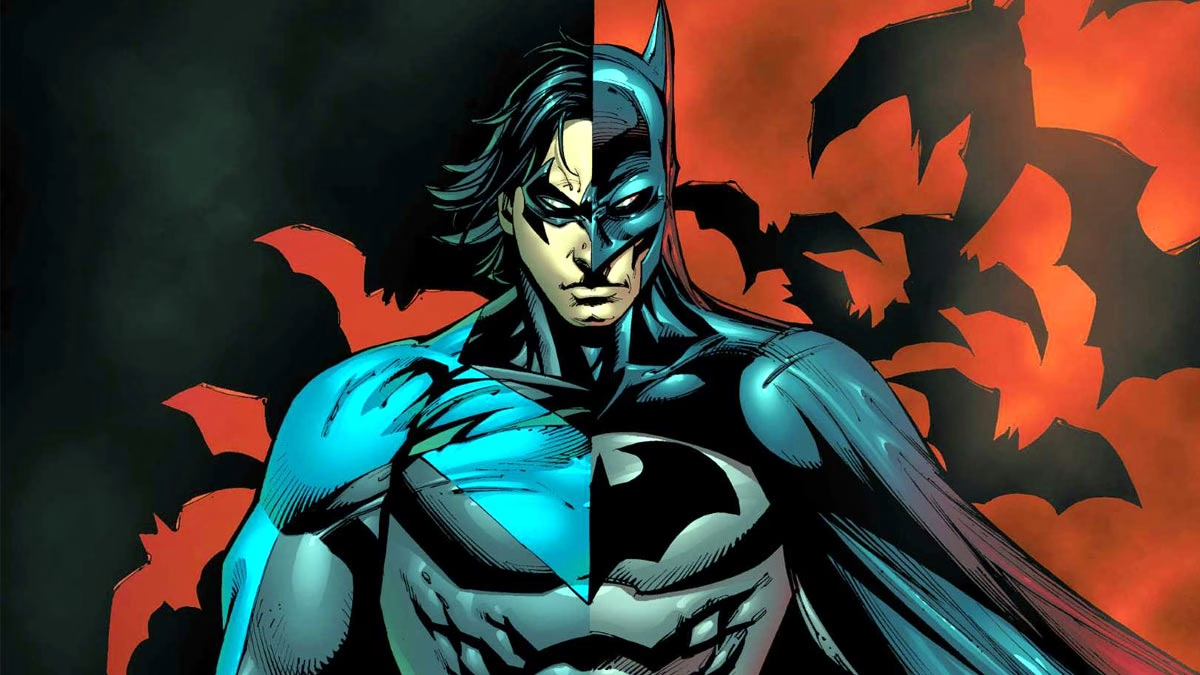
In 2009, following the psychological warfare of Batman R.I.P. and the cosmic sacrifice of Final Crisis, Gotham City woke up to its ultimate nightmare: a world without Batman. Battle for the Cowl deals with the Dark Knight’s succession.
Written and illustrated by Tony S. Daniel, this three-issue limited series focuses on what would happen when Batman, as a symbol more than a superhero, were to vanished from Gotham City. With the tie-ins, the story examines what happens in such a case, leaving a vacuum that both the underworld and the Bat-Family scramble to fill. This is a key event as it sets up the next era of Batman.
Table of Contents
- What is this about?
- A Short Review
- Collecting Batman R.I.P. in 2026
- Full Reading Order
- The Aftermath
📂 The Core Event: An Empty Throne
After Batman vanishes, Gotham begins collapsing. Criminals become more aggressive because the symbol of Batman no longer exists to restrain them. Police lose confidence. Members of the Bat-Family try to maintain order, but nobody officially takes Bruce’s place.
As Penguin and Two-Face are in an open war for control of the Gotham Underground, a new Black Mask emerges and engineers a massive breakdown of order, including a catastrophic attack connected to Arkham Asylum. That’s when a new Batman appears and starts killing people. He is not the only vigilante doing so. A new, deadly Azrael leaves decapitated bodies behind him, but Bullock and Harper are looking for him.
🗂️Key Story Elements:
- The Succession: Dick Grayson, Tim Drake, Jason Todd, Damian Wayne… Batman’s sons are notably different from one another. The question is, who is better suited to inherit the cowl?
- The Lethal Bat: It was an era during which Jason Todd regularly appeared to deliver his own brand of justice, a deadly one. Here, he shows what happens when Batman’s methods are stripped of his moral code.
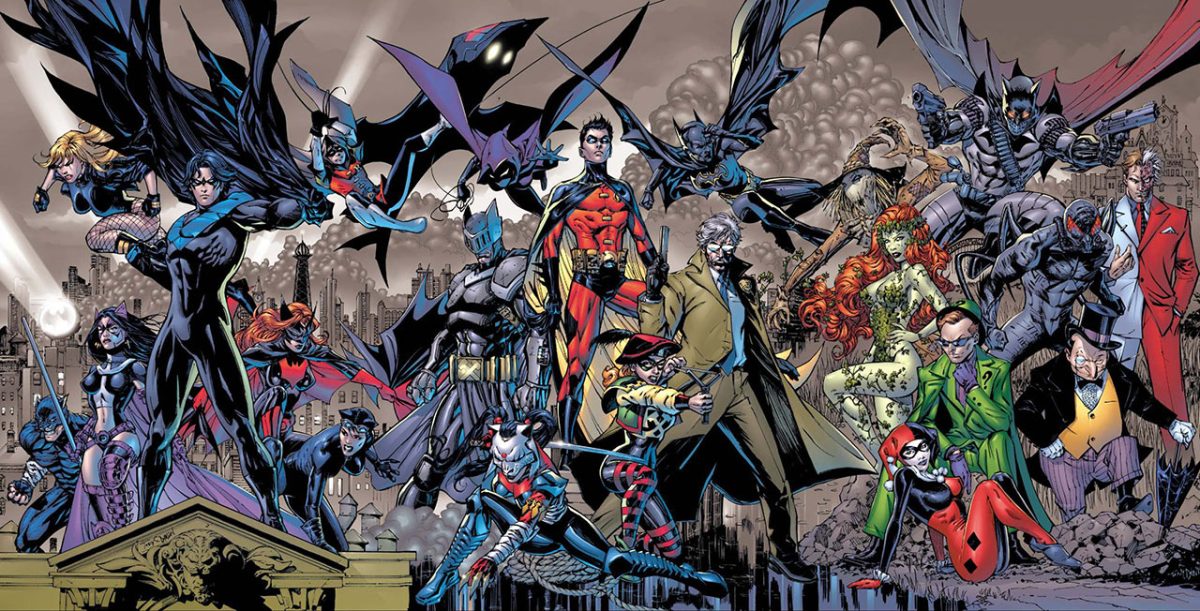
- The extended Bat-Family: Following the idea introduced by Cassandra Cain in the Batman and the Outsiders series, the Bat-Family unites to fight in Gotham, guided by Oracle’s voice: Huntress, Batgirl (Cassandra Cain), Black Canary, Lady Blackhawk, Wildcat, Manhunter (Kate Spencer), Misfit (Charlie Gage-Radcliffe), Knight and Squire, Spoiler (Stephanie Brown), Lynx, and more, including the newly rebuild Outsiders team.
2. A Short Review: Action-Packed, But Lacking Gravitas
Battle for the Cowl feels like a crossover built around a non-event. The idea of Gotham being overrun by criminals is not new, and here, it feels forced to justify the tie-ins. The main three-issue limited series is about Nightwing and Damian becoming Batman and Robin, which means dealing with Jason Todd. The fact that Dick doesn’t immediately recognize Jason under the mask is a bit insulting for regular readers. But everything surrounding Jason at that time was not the most well-crafted type of storytelling. Here, Tony S. Daniel didn’t build a mystery and barely esquissed a moral dilemma. The problem he addressed was an editorial one. In the past, it was made clear that Batman didn’t want Dick to succeed him, so he could thrive as Nightwing. That’s what put Jean-Paul Valley (Azrael) under the cowl during the Knightfall saga. There was a Nightwing book on the shelves after all. This time around, DC Comics canceled Nightwing, and all the event had to do was give us an excuse to justify making Dick the new Batman. Battle for the Cowl does that poorly, but it delivered on the action front.
Part of the tie-ins were also there to set up more new series. They are not all great reads. Azrael: Death’s Dark Knight did a good job dealing with loose ends and setting up the new Azrael, even if the character is not that interested. Introducing elements for the next Batgirl series, Oracle: The Cure, felt forced in the event. The Gotham Gazette comics were a good intro and outro, and some of the one-shots were fun (like The Underground #1), while others were anecdotal (like Arkham Asylum #1).
Overall, the idea was to find order in the chaos by designating a new Batman. The result looks more like a transition from one era to another, one that didn’t feel like required reading despite what it strives to accomplish. Still, it’s hard to deny that Battle for the Cowl did set up major changes in the world of Batman.
3. Collecting the Case in 2026
In 2024, DC Comics reprinted the whole event in one 440-page trade paperback. The book went with more of a publication order, but despite a few incoherences, it’s very readable that way.
- Batman: Battle for the Cowl – The Complete Collection – Azrael: Death’s Dark Knight #1-3, Batman: Battle for the Cowl #1-3, Batman: Battle for the Cowl: Arkham Asylum #1, Batman: Battle for the Cowl: Commissioner Gordon #1, Batman: Battle for the Cowl: Man-Bat #1, Batman: Battle for the Cowl: The Network #1, Batman: Battle for the Cowl: The Underground #1, Gotham Gazette: Batman Alive? #1, Gotham Gazette: Batman Dead? #1, Oracle: The Cure #1-3, Secret Six #9.
The Digital versions are not as complete for some reasons.
- Batman: Battle for the Cowl Kindle Edition – Batman: Battle for the Cowl #1-3, Gotham Gazette: Batman Alive? #1, Gotham Gazette: Batman Dead? #1.
- Batman: Battle for the Cowl DC Universe Infinite Edition – Batman: Battle for the Cowl #1-3, Batman: Battle for the Cowl: Arkham Asylum #1, Batman: Battle for the Cowl: Commissioner Gordon #1, Batman: Battle for the Cowl: Man-Bat #1, Batman: Battle for the Cowl: The Network #1, Batman: Battle for the Cowl: The Underground #1. The Gotham Gazette issues are in a separate section.
4. The Complete Battle for the Cowl Reading Order
A relatively small event, Battle for the Cowl is more about delivering a large view of Gotham without Batman. The majority of the tie-ins focused on the chaos and violence in the city, while the main limited series is about Batman’s succession.
🗂️Prelude to Batman: Battle for the Cowl
Beyond reading Batman R.I.P. and Final Crisis to learn about Batman’s downfall, there are a few comics that set up elements that contribute to the events.
- Batman and the Outsiders (vol. 2) #11-14 – Batman is gone, the Outsiders have lost their leader, and Batman had given instructions to Cassandra for such a case. To keep things running, she introduced the idea of the Network and has to convince Nightwing to accept it.
- Batman and the Outsiders Special #1 – Batman has left a message for Alfred. He made him the leader of The Outsiders, and now he is rebuilding the team. They appear together in Batman: Battle for the Cowl: Man-Bat #1.
📋When did Damian move back to Wayne Manor? Good question. No answer can be provided, though, as it appears this happened between Batman #681 and Batman: Battle for the Cowl #1, but the story was not told in a comic book.
📋Who is Jamie Harper, Harver Bullock’s new partner? She was recently promoted to the Major Crimes Unit, but her career was previously developed in the pages of the Robin series after being introduced in the Batman: Face the Face storyline, starting with Detective Comics #817.
📋Spoiler is back? Yes, it’s a recent development, also in the Robin series. See Robin: Violent Tendencies. It also explains what happened in Africa to Leslie Thompkins, who makes her comeback in Gotham Gazette: Batman Dead? #1.
🗂️Batman: Battle for the Cowl
Here is the complete Batman: Battle for the Cowl reading order, with all the tie-ins included. If you only want the bare essentials, read the Gotham Gazette tie-ins and the three issues of Batman: Battle for the Cowl.
- Gotham Gazette: Batman Dead? #1: The prologue shows how Gotham is on the verge of exploding without the Dark Knight to diffuse the situation. Vicky Vale looks for Bruce Wayne, Stephanie Brown contemplates her future, Leslie Thompkins is back in town, and Bullock and Harper start investigating a murder case.
- Oracle: The Cure #1-3: The evil Calculator seeks the remnants of the Anti-Life Equation to save the life of his daughter, and his path crosses Barbara’s, who has just come back to Gotham (she was based in Metropolis for a while).
- Batman: Battle for the Cowl #1: As Black Mask reappears to take control of the gangs, a new and deadly Batman starts shooting the criminals while Dick tries to deal with the chaos.
- Azrael: Death’s Dark Knight #1: After their last Azrael failed, the Order of Purity recruits the last of the Three Ghosts of Batman to wear the Suits of Sorrows.
- Batman: Battle for the Cowl: Commissioner Gordon #1: Escapees from Arkham are on the run, and Batman is not there to capture them again. Gordon has to go after Freeze.
- Batman: Battle for the Cowl #2: Jason Todd is determined to become the new Batman, but his “brothers” don’t want that.
- Batman: Battle for the Cowl: Man-Bat #1: Kirk Langstrom is looking for his wife in Gotham and stumbles on Doctor Phosphorus.
- Batman: Battle for the Cowl: Arkham Asylum #1: Dr. Arkham visits the ruin of his Asylum.
- Azrael: Death’s Dark Knight #2: Talia al Ghul reveals to the new Azrael the truth about his suit.
- Azrael: Death’s Dark Knight #3: The new Azrael finds his way of delivering justice.
- Batman: Battle for the Cowl: The Underground #1: The Riddler is tasked to find Black Mask before reuniting with Harley in this prelude to the Gotham City Sirens.
- Battle for the Cowl: The Network #1: Led by Oracle, Gotham’s heroes are going after Hugo Strange, who organized a betting game for Batman.
- Secret Six #9: Bane, Catman, and Ragdoll help Gotham citizens in their own, violent way.
- Battle for the Cowl #3: Dick Grayson comes face-to-face with Jason Todd in their fight for the cowl.
- Gotham Gazette: Batman Alive? #1: The Epilogue.
5. After the Battle: Where to Go Next?
The end goal of Battle for the Cowl was to set up an all-new status quo. There is a new Batman and Robin team! Here are the series launched after the event.
- Batman & Robin (Vol. 1): The Grant Morrison/Frank Quitely run featuring Dick Grayson and Damian Wayne as Batman and Robin. Before that, though, you may want to read Batman: Long Shadows by Judd Winick and Mark Bagley, dealing with the first days of Dick as Batman.
- Red Robin: Tim Drake is now Red Robin, and he is not happy with Dick’s choice for a Robin. He leaves Gotham to prove Bruce Wayne is still alive.
- Batman: Streets of Gotham: After Detective Comics, Paul Dini and Dustin Nguyen reunited for this new book exploring the impact of the new Batman, and following other heroes and villains.
- Gotham City Sirens: Also by Paul Dini (with art by Guillem March), this one follows Catwoman, Poison Ivy, and Harley Quinn teaming up.
- Batgirl (Vol. 3): Stephanie Brown is back and, with the help of Barbara Gordon, she becomes the new Batgirl.
- Azrael (vol. 2): Michael Lane is the new Azrael and he tracks down killers
The Next Case: Blackest Night
Nekron, a personified force of death who reanimates deceased superheroes and seeks to eliminate all life and emotion from the universe, is bringing the Blackest Night to the DC Universe.
[Proceed to Next Case: Blackest Night]