Legends (1986) Reading Order: The First Post-Crisis Crossover
In 1986, DC Comics was fresh off the success of Crisis on Infinite Earths. It was a new era with a rebooted universe. After that, the question was: What next? The answer seems to have been “another crossover event.”
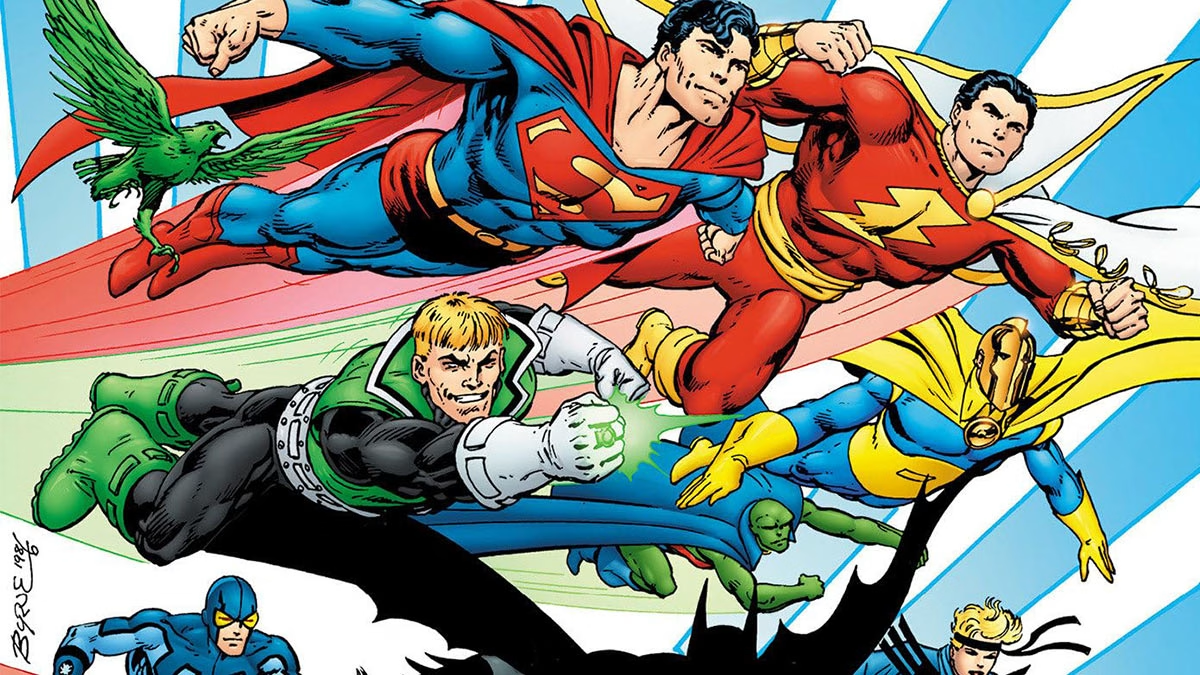
Before we got the Legends we know today, there was “Crisis of the Soul.” This scrapped 12-issue project was designed to show a world turning on its heroes through spiritual corruption. Though canceled after months of development, some of his ideas survived. In August 1986, editor Mike Gold and a star-studded creative team launched Legends. It wasn’t a sequel to Crisis, but an “introduction” to the modern DC Universe.
1. Opening Up the DCU: Reintroducing the Heroes
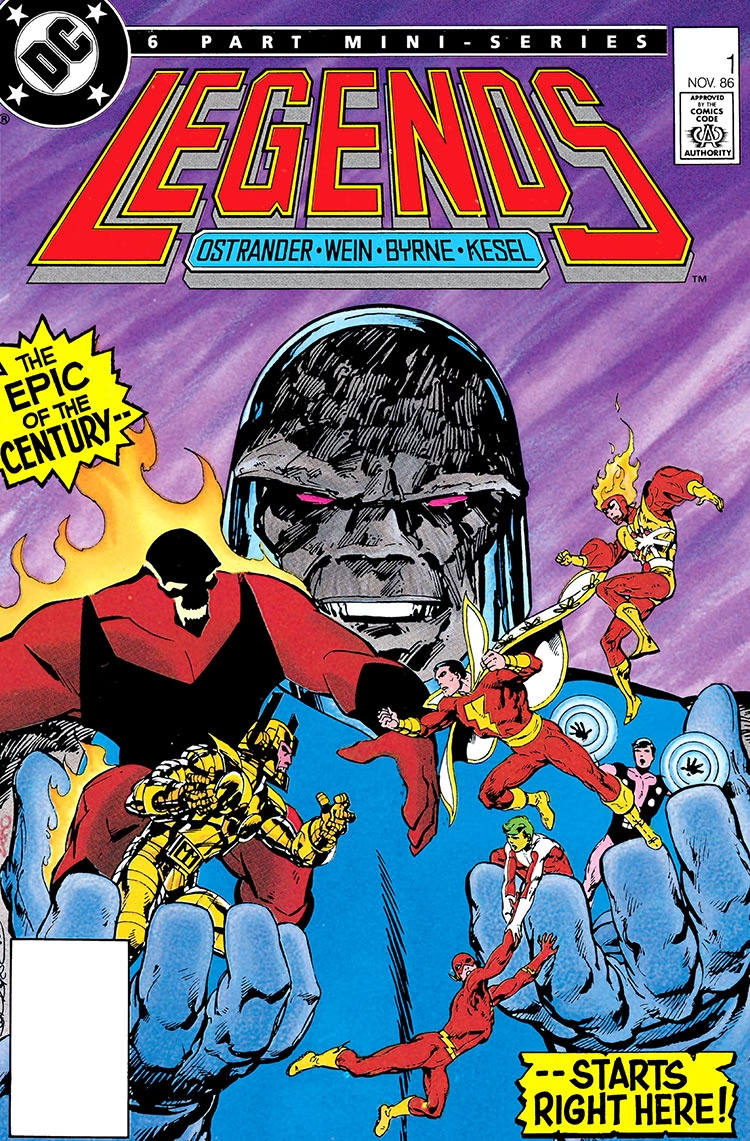
Plotted by John Ostrander, scripted by Len Wein, penciled by John Byrne, and inked by Karl Kesel, Legends saw Darkseid attacking Earth by using an original tactic: destroying their status as living legends, presenting them as the problem, not the solution. He sent agents to manipulate public opinion, leading people to reject those they swore to protect.
Reading the event today, the plot feels a bit flimsy, and the crossover in itself has to push hard to keep up with it. I found Legends to be very optional, except for two things: if you are reading the Justice League Detroit era and want the conclusion, and if you are interested in the Suicide Squad. And even then, most of the event is skippable.
Key Historical Story Elements:
- The Modern Suicide Squad: This event is the first appearance of the John Ostrander-style Task Force X.
- The End of a Justice League: The old Justice League comes and goes, making space for Keith Giffen and J. M. DeMatteis’ relaunch, the Justice League International.
- Wonder Woman Meets the Heroes: George Pérez’s run on Wonder Woman started to be published only two months before Legends #6, in which Diana makes her first appearance outside of her title, meeting the other heroes.
- Captain Marvel’s Introduction: Billy Batson was reintroduced in the DCU during the event, but played a more significant part in the story. The following year, his new origin story was published in Shazam!: The New Beginning by Dann and Roy Thomas, and artist Tom Mandrake
2. Finding the Legends event in 2026
For a long time, DC Comics had only made available a trade paperback published in 2016 to celebrate the 30th anniversary of the Legends event that collected the 6 main issues.
In 2026, in time for the 40th anniversary, the new massive hardcover edition collects this time the main eventwith all the tie-ins.
- Legends 30th Anniversary Edition – Collects Legends #1-6.
- Legends 30th Anniversary – Digital Edition – Collects Legends #1-6.
- Legends Omnibus – Collects Legends #1-6, Batman #401, Detective Comics #568, Green Lantern Corps #207, Cosmic Boy #1-4, Justice League of America #258-261, Secret Origins #10 and #14, The Fury of Firestorm #55-56 and #58-59, Blue Beetle #9-10, The Warlord #114-115, Superman #3, Adventures of Superman #426, and Action Comics #586
3. The Complete Legends Reading Order
There are three ways to read Legends. The first is to stick with the 6-issue miniseries. The second is to go through the 28+ issues published under the Legends banner. The third is to read the mini and only the tie-ins connected to the characters you are interested in.
The following reading guide to the Legends crossover will help you select the issues you want to read:
The Prologue
- Batman #401: The first post-crisis Batman story ft. Magpie (see Man of Steel #3) and G. Gordon Godfrey, who is the man arguing for a ban on superheroes.
- Detective Comics #568: Batman vs. the Penguin. Only the last page referenced the growing anti-hero sentiment and Godfrey.
- Legends #1: The official beginning of the event.
- Green Lantern Corps #207: Guy Gardner’s back on Earth. A prelude to his appearance in Legends #2.
Fun fact: The “G. Gordon Godfrey” name is a reference to G. Gordon Liddy, one of the co-conspirators in the Watergate scandal.
The Rising Tension
- Legends #2: The tension rises
- Cosmic Boy #1: What happened to Legion of Super-Heroes’s Cosmic Boy directly after the events of Legends #2.
- Justice League of America #258: The JLA is disbanded. It’s the beginning of the end. Part 1/4.
- Secret Origins (Vol. 2) #10: Four possible origins of the Phantom Stranger. Only one “Footsteps” will be referenced in later books.
- Firestorm (Vol. 2) #55: What happened to Firestorm directly after the events of Legends #2.
- Booster Gold #13: Not officially labeled as part of the event, it is set at this point and follows Booster while recovering from a battle.
- Legends #3: Enter The Suicide Squad.
The World at War
- Cosmic Boy #2: The continued adventures of Cosmic Boy and Night Girl as public opinion of the heroes turns sour and violent.
- Justice League of America #259: Someone is after the leaguers. Part 2/4.
- Firestorm (Vol. 2) #56: In Pittsburgh, Godfrey’s acolyte creates chaos, but Firestorm fights inner conflict.
- Blue Beetle (Vol. 6) #9: Back in Chicago, BB is having office problems. Introduces the Chronos story that concludes in Legends #4.
- Legends #4: The situation descends into chaos.
- Warlord #114: Follow-up to what happened after Darkseid sent his assistant DeSaad to Skartaris to destroy the legend of Warlord.
- Cosmic Boy #3: Cosmic Boy and Night Girl can’t go back to their time and have to fix their Time Bubble.
- Justice League of America #260: J’onn J’onzz tries to save the Leaguers. Part 3/4.
- Blue Beetle (Vol. 6) #10: Following Legends #4, BB tracks the Time-Thief.
- Warlord #115: The real Warlord learns what happened and goes after DeSaad.
Note: This reading order follows the official one, but if you prefer, you can read all the Justice League of America comics consecutively. Idem for the Warlord and Cosmic Boy issues. It doesn’t affect the overall story.
The Superman “Apokolips” Trilogy
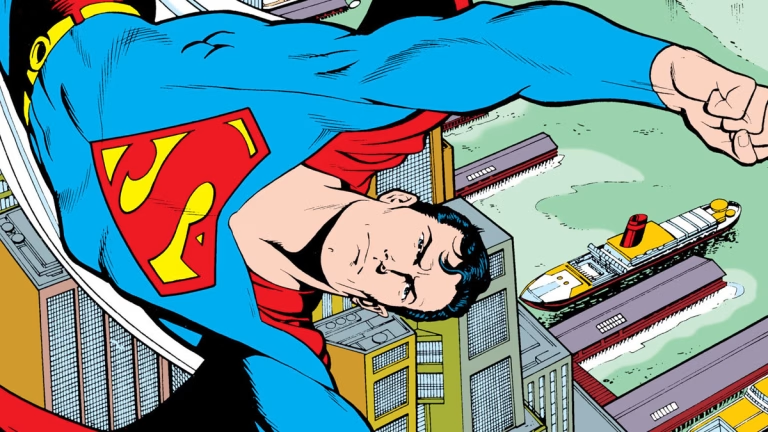
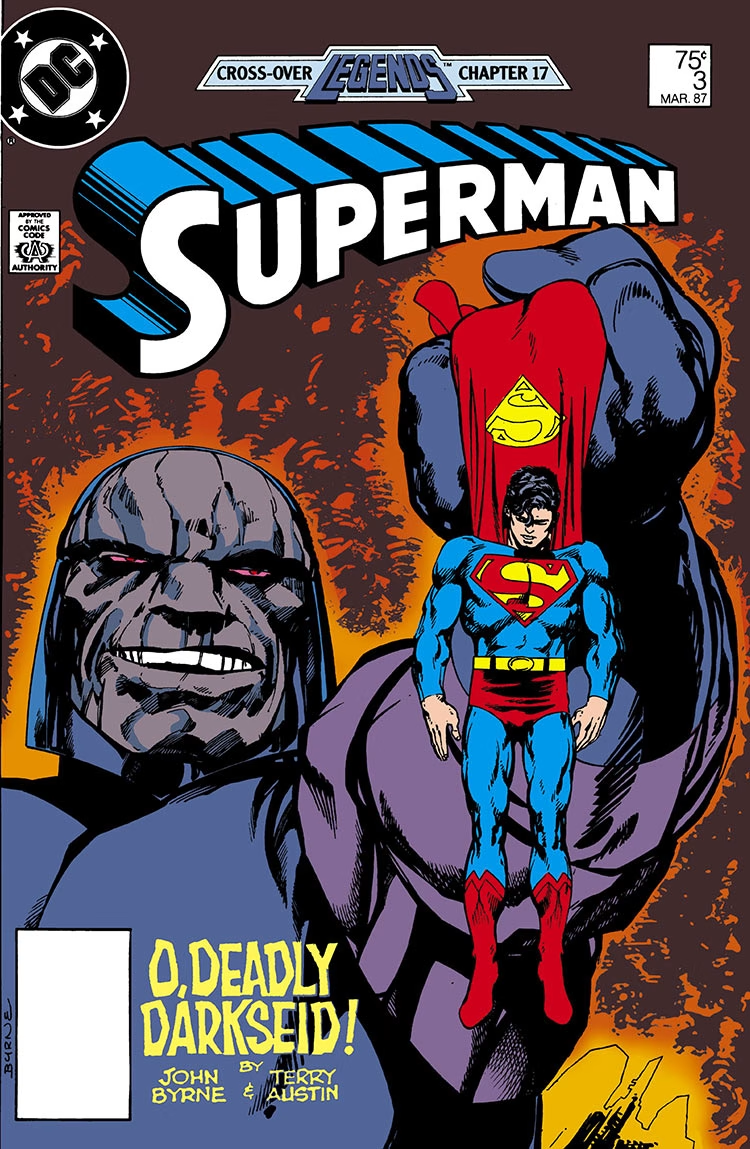
The next three Superman tie-ins form a complete storyline. Darkseid kidnapped Clark Kent, bringing him to Apokolips, where he’ll try to help the little people.
- Superman (Vol. 2) #3
- Adventures of Superman #426
- Action Comics #586
The Grand Finale
- Legends #5: G. Gordon Godfrey’s rhetoric reaches a new level.
- Cosmic Boy #4: The end of the 4-issue miniseries. Can be read directly after CB #3.
- Justice League of America #261: Part 4/4. The end of the Detroit era of the JLA.
- Legends #6: The Final confrontation and the formation of the new Justice League.
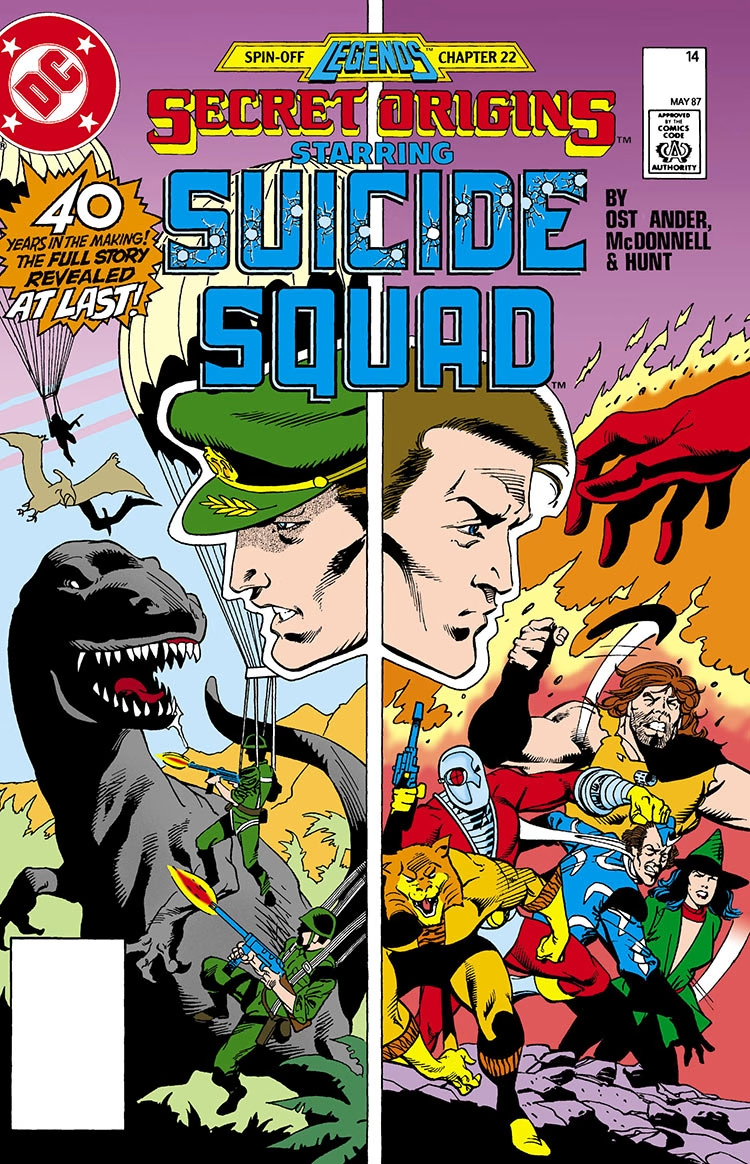
- Secret Origins (Vol. 2) #14: The Secret Origin of the Suicide Squad.
After the Legends: Where to Go Next?
While the events saw the conclusion of Volume 1 of Justice League of America, Legends wasn’t an ending, but a launchpad. Here is a quick map to follow what came after:
- Cosmic Boy and Night Girl’s story continues in the pages of Legion of Super-Heroes #36.
- Justice League of America is dead. Long live the Justice League International.
- Batman started his Modern Age run with the first two issues of the event.
- Superman continues his reinvention under John Byrne’s direction
- Captain Marvel is back in Shazam!: The New Beginning.
- The Suicide Squad members are back in their own series by John Ostrander.
- Wonder Woman had only begun her Modern Age renaissance with the freshly launched reboot (Volume 2).
- The Flash (aka Wally West) runs in a new solo title, The Flash (Volume 2), right after Legends.
- Blue Beetle (Vol. 6) continues for over 10 more issues. He’ll join the JLI with Booster Gold.
- Warlord continues up to issue #133.
- Firestorm had barely reached the halfway mark of its volume. It continued for years.
- The fate of Glorious Godfrey is revealed in Suicide Squad #3.
The Case Continues: The Road to Millennium
The resolution of the Legends conflict brought a brief moment of stability to the DC Universe, but it also left the world’s heroes exposed. As the new Justice League found its footing and the “Modern Age” of the Man of Steel began, a far older threat was preparing to strike from within.
The paranoia established by G. Gordon Godfrey was merely a prelude to the Manhunter conspiracy. Having spent centuries embedding sleeper agents into the lives of Clark Kent, Wally West, and the Guardians of the Universe, the Manhunters were finally ready to activate their global network.
[Continue the history: The Millennium (1988) Reading Order]