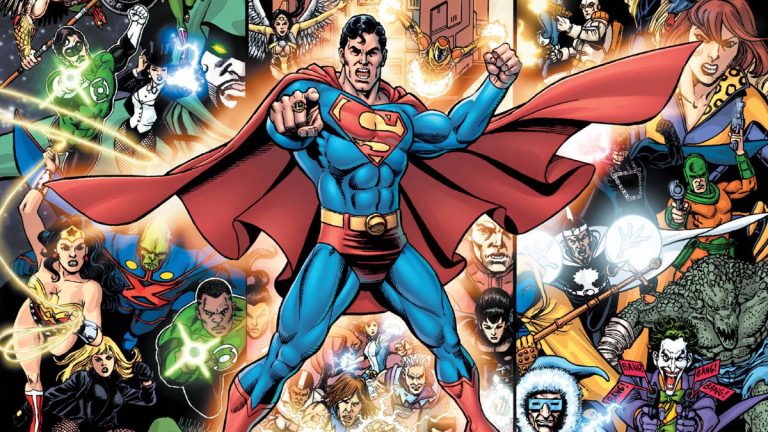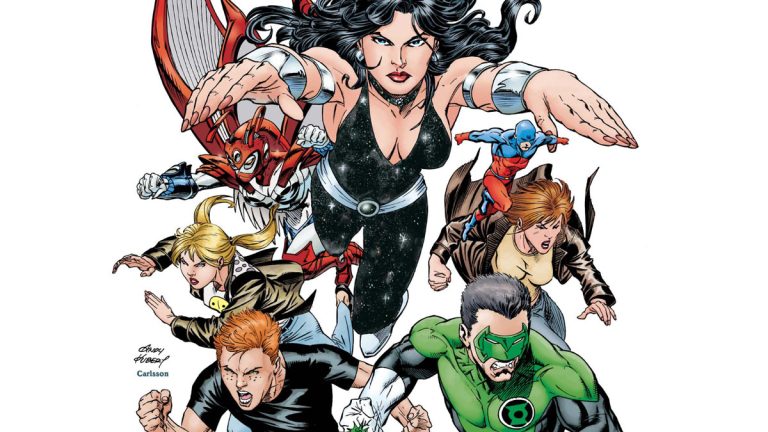
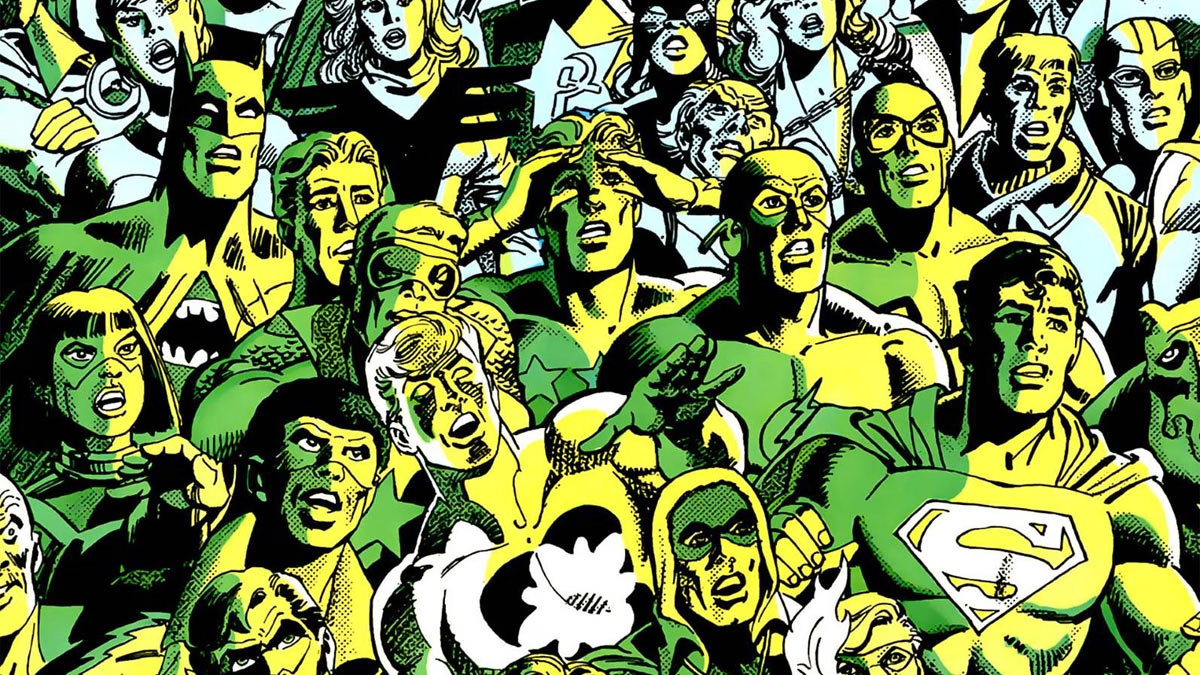
Millennium (1988) Reading Order: No man escapes the Manhunters during this Weekly Crossover event
Following the line-wide restructuring initiated by Crisis on Infinite Earths and the subsequent relaunch momentum of Legends, DC Comics introduced Millennium as its next major crossover event. I’m sure readers today may feel the use of the word “major” as an overstatement and, in the overall history of the DC Comics universe, I would certainly concur. Nevertheless, as a publishing initiative, this one was ambitious for the time. Published as an eight-issue weekly limited series between January and February 1988, the project represented one of DC’s most coordinated line-wide efforts of the decade, with extensive crossover chapters running through 45 issues of DC’s ongoing titles.
Written by Steve Englehart and illustrated primarily by Joe Staton, Millennium centered on the Guardians of the Universe and the revelation that the ancient robotic Manhunters had secretly infiltrated Earth for centuries. The event introduced the “Millennium Week” banner across DC’s publishing line, with individual issues revealing long-standing supporting characters as sleeper agents, an approach that reoriented the DC Universe toward themes of distrust, conspiracy, and institutional corruption.
Positioned as both a cosmic epic and a paranoid thriller, Millennium marked a tonal shift from the post-Crisis optimism of 1986 to a narrative climate defined by hidden enemies and systemic infiltration. It remains the definitive story of the Manhunter cult’s attempt to thwart the evolution of the “Chosen” ten.
1. The Great Betrayal: Who are the Manhunters?
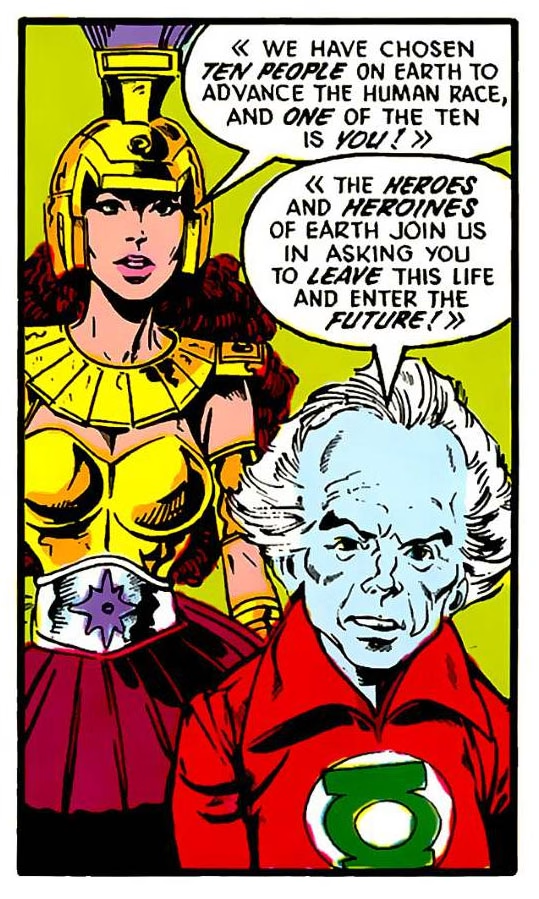
The Millennium event opens with the return to Earth of a lone Guardian of the Universe and a Zamaron, who reveal a plan to accelerate human evolution. Guided by the Guardians’ long-standing interest in fostering order across the cosmos, they seek to identify ten individuals who will transcend humanity and become a new group of immortal beings tasked with shaping the universe’s future.
Opposing this initiative are the Manhunters, the robotic enforcers created originally by the Guardians. Long before the rise of the Green Lantern Corps, the Manhunters had been decommissioned after proving inflexible and dangerously absolutist in their pursuit of justice. In Millennium, it is revealed that they have covertly infiltrated Earth for centuries, embedding sleeper agents within key institutions and, more destabilizingly, within the personal circles of the superhero community.
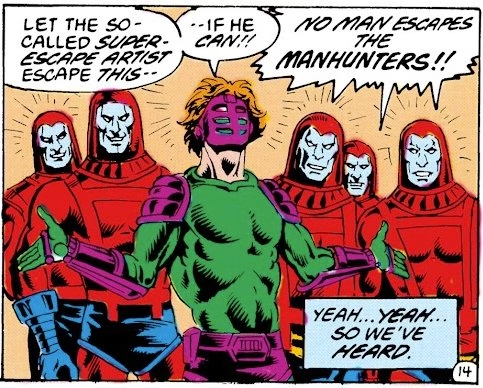
Under the recurring declaration “No man escapes the Manhunters,” the crossover exposed numerous supporting characters as infiltrators, including figures closely associated with major heroes. The revelation that trusted confidants had been replaced or manipulated reinforced the event’s central themes of paranoia and systemic subversion, transforming the DC Universe into a landscape where loyalty itself could not be assumed.
Key Historical Elements:
- The First Weekly Event: Long before 52 or Countdown, DC proved they could pull off a weekly narrative across dozens of titles.
- The New Guardians: The event launched a controversial and experimental series, The New Guardians, featuring DC’s first openly gay hero, Extraño.
- The Manhunter Legacy: The event redefined the Manhunters from generic robots into a cult-like conspiracy.
- Series Finale: The Booster Gold series and the Outsiders series were concluded due to events that occurred during the crossover. Only a few issues later, the Green Lantern Corps series, the Blue Beetle series, and the Infinity Inc. series also ended.
2. A Short Millennium Review
I don’t have much to say about Millennium, except that it’s too long for what it delivers in the end. Herupa and Nadia arrive on Earth, announcing that they are going to create new godlike beings to guide humanity. Knowing how quickly The New Guardians then faltered makes the whole ordeal feel futile.
Using every available series was also a misguided idea, as some characters didn’t really fit alongside the others. While it was certainly an effective way to sell more comics, it felt narratively forced. The Young All-Stars tie-ins, for example, are barely relevant. As for the Manhunters, there were some good ideas, but sustaining them was difficult. I quite liked the fact that, at one point, the heroes couldn’t bear to hear their enemies ridiculously repeating ‘No man escapes the Manhunters’ every time they attacked. It becomes a joke. However, the levity it adds also undermines the menace.
Ultimately, I would not recommend reading about all the events. As I am going to try to publish dedicated reading orders for each hero, I will provide a brief overview of what is essential for each of them, since most of them only require you to read a small part.
3. Collecting the Event in 2026
DC Comics never did a good job at collecting Millennium. We can hope that the 40th anniversary will finally bring an omnibus. In the meantime, the main event is available in one trade paperback, but for the tie-ins, you’ll have to track them down individually.
- Millennium (Trade Paperback): Collects only the core 8-issue miniseries.
4. The Complete Millennium Reading Order
The main thing with Millennium is that, unlike most other crossover events, if you only read the core miniseries, some story elements will be missing. Not all the tie-ins are must-reads, though. If you are looking to skip some of the tie-ins, start with the following:
- If you are reading Wonder Woman, you can skip the event. If you are reading the event, you can skip the Wonder Woman issues.
- The issues of Young All-Stars are completely optional.
- If you are not a regular reader of The Legion of Super-Heroes, you can skip them.
- The Secret Origins issues are retelling stories already established. You can skip them, especially issue #23.
- The Flash #9, Wonder Woman #13, and The Spectre #11 have the “Millennium Week” banner on their cover, but are not directly related to the event.
Week 1: The Gathering
The first week began with revelations that Manhunters had replaced key characters in superheroes’ lives. The tie-ins deal with the ones revealed on the last page of Millennium #1.
- Millennium #1: Manhunters are hiding near the heroes, ready to strike.
- Firestorm (Vol. 2) #67: The event of Millennium #1 and what came after from the “new” Firestorm’s perspective.
- The Flash (Vol. 2) #8: Conclude the previous Flash story before running through the events of M #1 to deal with the aftermath.
- Outsiders #27: Back at the base, the Outsiders fight the traitor.
- Wonder Woman Vol. 2 #12: The Millennium part here is irrelevant to the issue.
- Justice League International #9: Set directly after M#1, but referenced events from the other tie-ins.
Week 2: The Hidden Enemy
In week #2, more heroes are betrayed by those close to them.
- Millennium #2: Introduction of the chosen ones.
- Superman (Vol. 2) #13: The last three pages are about what happened to Superman in M#2.
- Batman #415: Picked up exactly where M #2 left Batman, on the edge.
- Legion of Super-Heroes (Vol. 3) #42: Follow-up to Laurel Kent’s appearance in M #2
- Blue Beetle (Vol. 6) #20: Blue Beetle goes to Iran to protect one of the chosen ones.
- Secret Origins (Vol. 2) #22: The story of the Manhunters, and of those who fought crime under the name “Manthunter.” Reveals even more sleeper agents.
- Young All-Stars #8: After SO #22, Paul Kirk and Dan Richards are sent on a mission.
Week 3: Apokolips & Ambush
- Millennium #3: The heroes gather the Chosen Ones.
- Adventures of Superman #436: A Week 3 comic, but it’s set directly after Superman #13 and can be read earlier.
- Booster Gold #24: Booster Gold comes home after M#3 and finds a surprise.
- Green Lantern Corps #220: Hal goes after a missing Chosen One.
- Infinity Inc. #46: A new Manhunter spy is revealed and creates chaos.
Week 4: Search & Destroy
A significant portion of Week 4 revolves around a geographical crossover, with four series set in the Louisiana Bayou, home to a Manhunter base.
- Millennium #4: Sets up the four-part crossover coming next
- Suicide Squad #9: The Squad attacks the Manhunters’ base.
- Captain Atom #11: Captain Atom visits the swamp. Picked up the story after CA’s appearance in SQ #9.
- Detective Comics #582: Batman looks out for the real Gordon and goes back to Louisiana.
- Spectre (Vol. 2) #10: Events coincide with DC #582, but from Jim Corrigan and The Spectre’s POV.
- Action Comics #596: The Spectre helps Superman deal with the actions of the Manhunters in Smallville.
- Teen Titans Spotlight #18: Aqualad and Aquaman deal with underwater Manhunters.
Week 5: The Turning Tide
- Millennium #5: Short celebration before setting up what comes next.
- Firestorm (Vol. 2) #68: Firestorm and Captain Atom team up for a rescue mission.
- Justice League International #10: The Justice League attacks the Manhunters in space.
- Outsiders #28: The Outsiders help Looker’s people only to face the Manthunters one final time (as the series ends here).
- Wonder Woman #13: WW goes back to her storyline, not connected to the event.
- The Flash (Vol. 2) #9: Not related to the event despite the branding.
Week 6: The Chosen Evolve
- Millennium #6: The chosen make a choice.
- Superman (Vol. 2) #14: Superman and Hal Jordan go after the Highmaster.
- Blue Beetle (Vol. 6) #21: Blue Beetle and Mister Miracle team up and face more Manhunters.
- Legion of Super-Heroes (Vol. 3) #43: The conclusion to the Laurel Kent story.
- Secret Origins (Vol. 2) #23: The history of the Guardians and the Zamorans. Plus, a tale about the Floronic Man at Arkham Asylum.
- Young All-Stars #9: Green Lantern punches Nazis and saves people.
Week 7: The Final Stand
This is the end of the fight against the Manhunters.
- Millennium #7: The final battle against the Manhunters on Earth
- Booster Gold #25: Booster is on the run. This is the final issue of the series.
- Adventures of Superman #437: Luthor tries to change one of the chosen’s mind with a tale of Superman.
- Green Lantern Corps #221: The GLs face an old enemy.
- Infinity Inc. #47: The Infinitors take a tour of Australia with one of the chosen.
Week 8: New Beginnings
The event comes to an end with a prelude to The New Guardians series.
- Millennium #8: The creation of the New Guardians.
- Teen Titans Spotlight #19: Starfire and Harbinger are ambushed by Manhunter agents.
- The Spectre #11: A reunion of magick being, not related to the event, despite the banner.
5. After the Millennium: Where to Go Next?
The Millennium event was all about the creation of The New Guardians. They were envisioned as a premier team for the 1990s, but they mostly faded into obscurity. Because they were chosen by a Guardian of the Universe and a Zamaron, they have a permanent tie to the Oan mythos, but most of those new immortal godlike heroes have been killed or forgotten since.
In any case, the fallout of Millennium led to the launch of the following series:
- The New Guardians: Follow the “Chosen” into their own 12-issue series (1988).
- The Manhunter Solo Series: Following the event, the character Mark Shaw took up the mantle in Manhunter #1. The series from writers John Ostrander and Kim Yale, and artist Doug Rice, lasted for 24 issues.
📂 The Next Case: Invasion! (1989)
If Legends was about the public’s soul and Millennium was about internal paranoia, the next chapter in DC’s history is a full-scale world war. In Invasion!, the alien Dominators lead a coalition of nine races to Earth to eliminate the “metahuman threat” once and for all.
Follow the road to the Invasion! Reading Order (Coming Soon)