DC Comics History: The Bronze Age, From Explosion to Implosion
For DC Comics, the Silver Age was an era of reinvention when it came to its line of superhero comics, but it was the same people who were still creating those comics. With Marvel Comics becoming a serious competitor, changes were once again needed, but this time they were just as much on the pages as behind the scenes.
New editorial director Carmine Infantino brought change in a notable way. The funny animal comics disappeared, and “Weird” comics became à la mode (Weird Western, Weird Adventure Comics, Weird War, Weird Mystery). But Infantino’s important change was to give artists power and to bring new talents in. Marv Wolfman, Len Wein, Denis O’Neil, and Neil Adams soon became important names at DC.
The King of Changes
One big coup was getting Jack Kirby after he had spent a decade making Marvel a success. He introduced new ideas, tremendous concepts that are still explored today, with his ambitious Fourth World mythology. He launched his story while writing the Jimmy Olsen series and developed it further through three interconnected titles: New Gods, Forever People, and Mister Miracle.
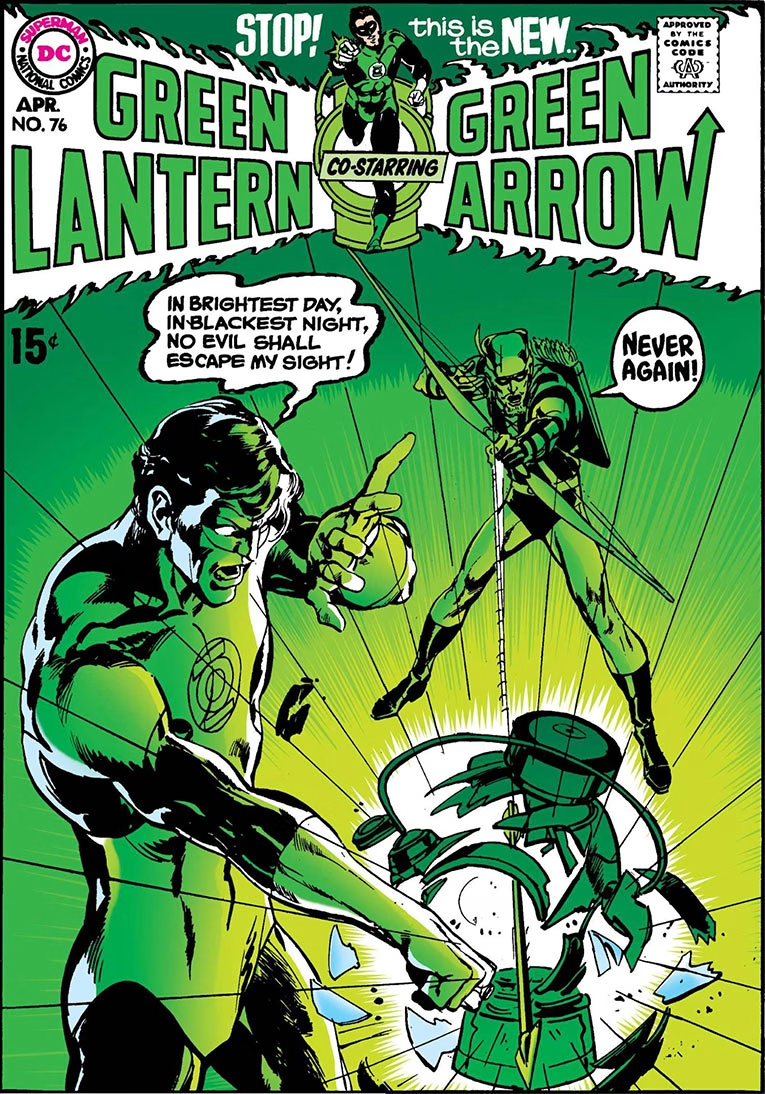
One pivot that seemed small at the time was to have Denis O’Neil write a team-up book starring Green Lantern and Green Arrow with Neal Adams as an artist. The creative duo redefined the characters, making the archer a more politically aware hero while Hal Jordan was lost in the stars, disconnected from the reality of everyday struggles on Earth. The title soon became a way for O’Neil and Adams to tackle social issues of the time. The comics about Speedy, Green Arrow’s sidekick, revealing his drug problems, even forced the Comics Code to change for the first time.
There were other major new creations included Swamp Thing, introduced in 1971 by Len Wein and Bernie Wrightson; The Demon (Etrigan), created in 1972 by Jack Kirby; and Dennis O’Neil and artist Mike Grell extended Green Arrow’s supporting cast, introducing Dinah Lance as Black Canary. A newcomer was also an old hero, as C. C. Beck revived Captain Marvel for DC under the title Shazam! in 1973. But DC Comics eventually started to think even bigger during the second half of the 1970s after Jenette Kahn was appointed publisher in 1976.
From the DC Explosion to the DC Implosion
Recruited to modernize the publishing company, Kahn officially changed its name from National Periodical Publications to “DC Comics,” and commissioned a new logo from artist Milton Glaser. She implemented higher production standards, including better paper and printing, and pushed for more creator-friendly policies, such as royalties and formal credit, which were uncommon in the industry at the time. Her tenure also coincided with an ambitious expansion of the line, later branded as the “DC Explosion,” which aimed to broaden DC’s reach across genres and increase its presence on newsstands.
During that time, we saw the introduction of Black Lightning in 1977, created by Tony Isabella and Trevor Von Eeden, DC’s first African-American superhero to headline his own title. To appeal to younger readers, Firestorm was introduced in 1978 by Gerry Conway and Al Milgrom.
But the explosion led to the infamous DC Implosion. The raised cover prices, some economic pressures, distribution failures, and internal overreach led to a sudden shrinking of the line and the staff. DC Comics was looking bright one day and very ill the next, but Superman came to the rescue.
Flying on the big Screen and to the Comic Book Shops
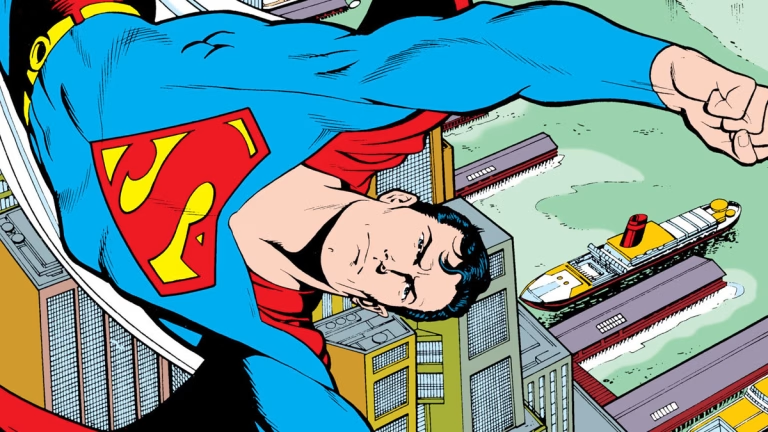
In 1969, Kinney acquired Warner Bros.-Seven Arts, and in 1972, the company reorganized as Warner Communications. As a result, DC Comics became a subsidiary of Warner Communications, placing it within a growing entertainment conglomerate and reinforcing the long-term strategic value of its intellectual properties across film, television, and licensing. This led to the development of a Superman movie starring Christopher Reeve and directed by Richard Donner, which came out in 1978, when the company was at its lowest point.
A new newspaper strip was launched, “World’s Greatest Super-Heroes,” the merchandising sold like hot cakes, and soon DC Comics’ finances started to look brighter, even if the sales numbers of comics were still weak. To help, a new format was introduced: the limited series (inspired by the success of TV miniseries like Roots) with World of Krypton and The Untold Legend of Batman. Though comics on newsstands were losing their commercial appeal, a new way to distribute the books was rapidly growing with the emergence of comic book shops. The first DC title exclusively sold in the comics shops was Madame Xanadu #1 by Steve Engleheart and Marshall Rogers in 1981. It was sold 50cts and without the Comic Code seal
But there were still hits on the newsstands like The New Teen Titans by writer Marv Wolfman and artist George Pérez, which launched in 1980. Roy Thomas, Rich Buckler, and Jerry Ordway introduced the All-Star Squadron, which was set during World War II and used superheroes from the Golden Age, including ones that were from Quality Comics that DC had acquired. Thomas also wrote a non-superhero title, the fantasy series Arak, Son of Thunder, created with Ernie Colón.
DC Comics on the Road to Modernity
During the first half of the 1980s, war, horror, and fantasy titles were still present, but superheroes increasingly dominated the line again. The Superman titles continued to reinforce his image as a paragon of virtue, while Batman stories built on the darker tone established in the 1970s, increasingly favoring urban crime and psychological conflict. Meanwhile, Wonder Woman struggled editorially during this period, reflecting broader uncertainty about how to modernize the character. It was also a period during which DC increasingly favored serialized narratives that rewarded regular readership. The idea of a more coherent superhero universe started to be explored.
The Bronze Age was tumultuous for DC Comics. The company seriously changed its way of working, a new generation of artists appeared, experienced paid off, while others almost put the superheroes out of business, movies and TV Shows helped reach a new audience, and the comic book shops emerged to introduce a new way of distributing comics.
When this era ended, everything was ready for the Modern Age.
This article was written with the help of 75 Years Of DC Comics: The Art Of Modern Mythmaking by Paul Levitz, published by Taschen.