Flashpoint Reading Order: The End of The Post-Crisis era
As the massive crossover event Crisis on Infinite Earths did in 1985-1986, Flashpoint put an end to another major era of the DC Universe continuity in 2011: The Modern Age. The kind of events comic book companies always teased, but rarely delivered, the ones that really changed everything.
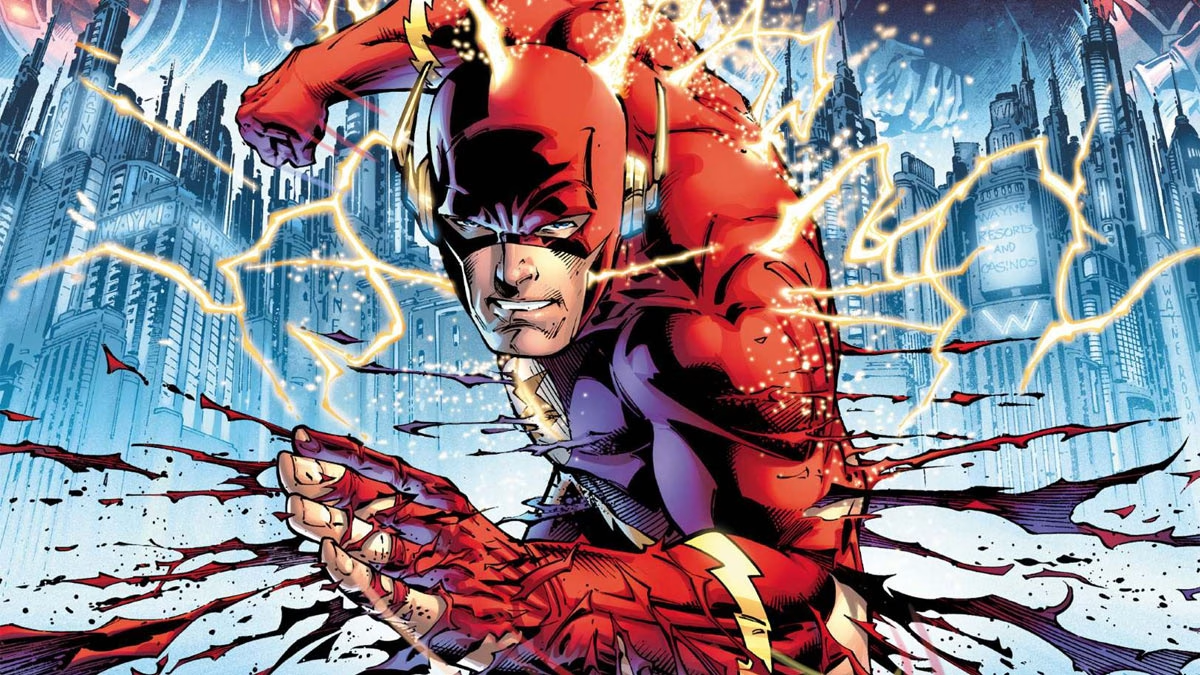
Written by Geoff Johns and illustrated by Andy Kubert, Flashpoint centers on Barry Allen, the freshly returned Silver Age Flash, who wakes up in a world he doesn’t recognize. In this fractured reality, the Justice League was never formed, Superman is a prisoner of the state, and a genocidal war between Atlantis and Themyscira has brought humanity to the brink of annihilation.
It’s not just another event to file in the DC Casebook, it’s the one that closed the book on the Post-Crisis era (1986-2011). Published as a five-issue limited series in 2011, it paved the way for the line-wide reboot known as the New 52.
- Historical Context: The End of an Era
- A Short Review
- Collecting Flashpoint in 2026
- Full Reading Order
- After the Event
1. The Broken Mirror: What is the Flashpoint?
The Flashpoint event begins with Barry Allen realizing that his mother, Nora Allen, is alive, but at a terrible cost. In saving her from being murdered by the Reverse-Flash, Barry inadvertently triggered a temporal shockwave that altered the history of every hero in the DC Universe.
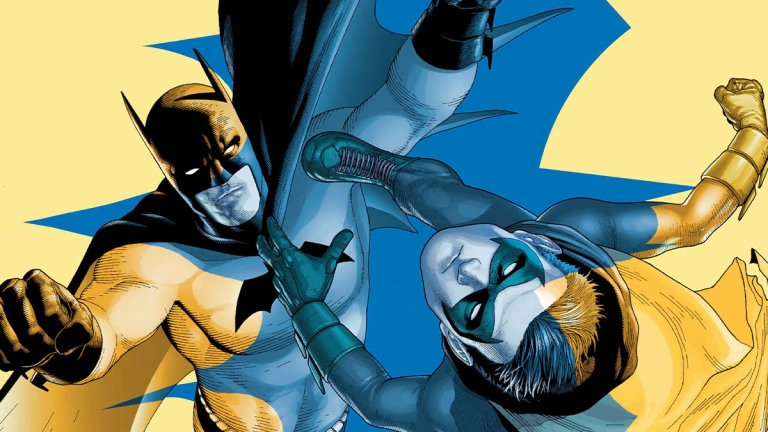
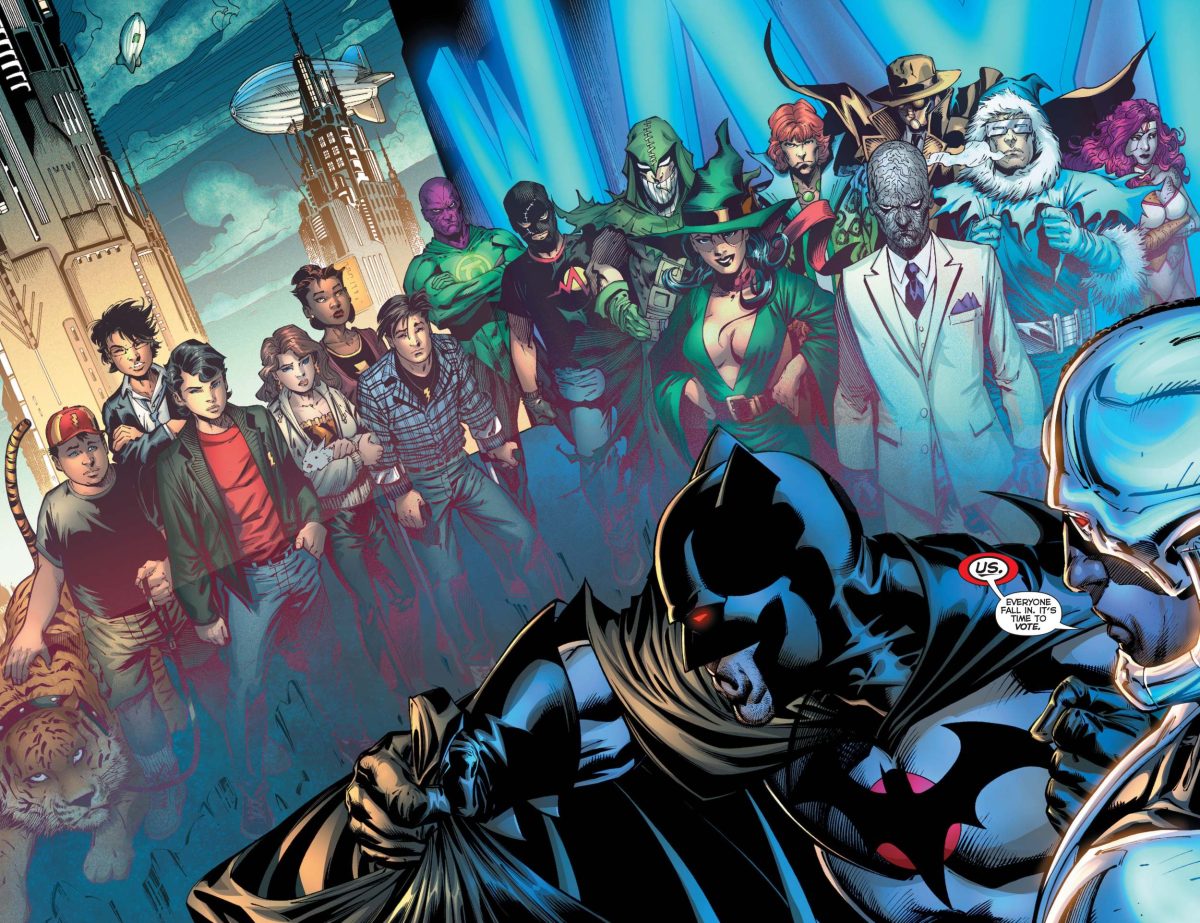
The most destabilizing revelation of the event was the fate of the Wayne family. In this timeline, it was Bruce Wayne who died in Crime Alley, leading his father, Thomas Wayne, to become a brutal, alcoholic Batman, and his mother, Martha, to descend into madness as this world’s Joker. In this fractured reality, the Justice League was never formed, Superman is a prisoner of the state, and a genocidal war between Atlantis and Themyscira has brought humanity to the brink of annihilation.
Key Historical Elements:
- The Final Reboot: Unlike Crisis on Infinite Earths, which merged worlds, Flashpoint was used to simplify and rejuvenate the entire DC line.
- The Burden of Causality: Barry Allen is no longer just a hero reacting to events, but the cause of them, redefining time travel as a moral risk and positioning him as a self-limiting figure.
- The Lost Legacy: Legacy characters such as Wally West are erased or displaced, introducing the idea of missing history that would later become central to DC Universe Rebirth.
- The Darker Mirror: The conflict between Wonder Woman and Aquaman popularized more ruthless, militarized interpretations of both characters, emphasizing how context reshapes heroism.
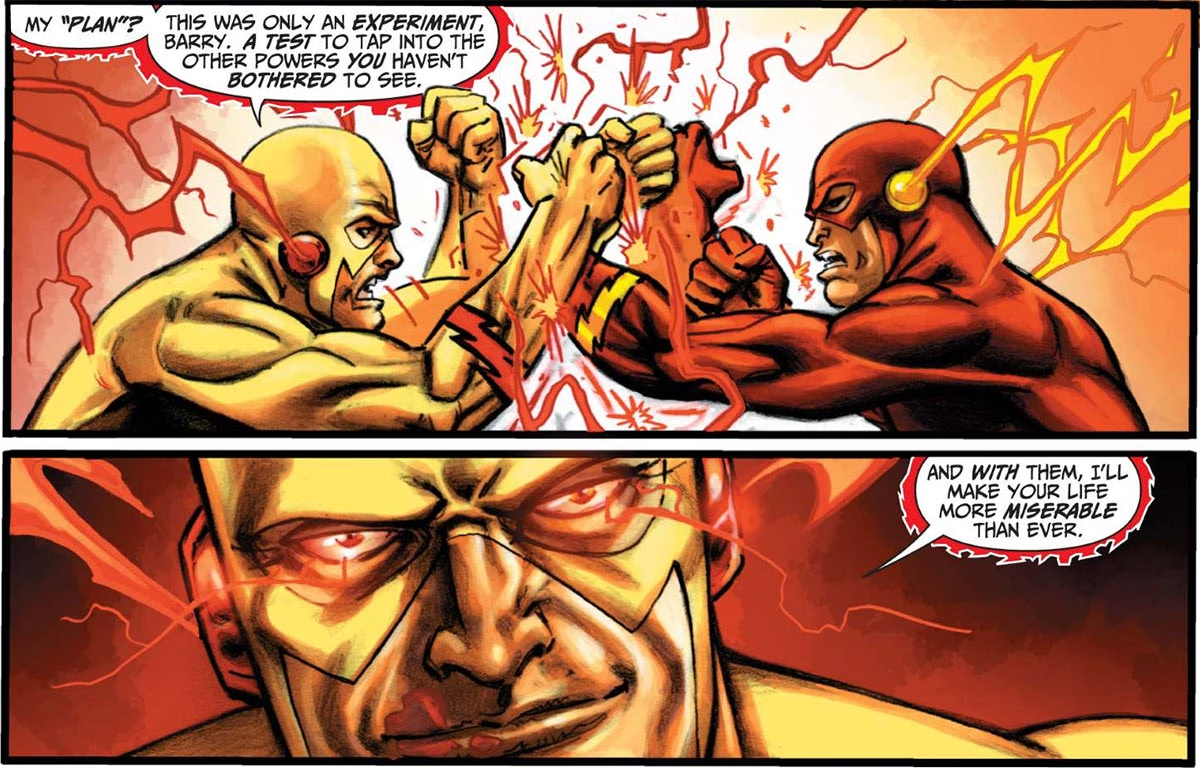
- The Arch-Nemesis Consolidation: Eobard Thawne is elevated into the Flash’s definitive antagonist, transforming their rivalry into a closed loop where each defines the other.
- The Institutional Elevation: Cyborg undergoes one of the most concrete status changes, becoming reframed as a central technological and strategic figure in the DC Universe.
2. A Short Flashpoint Review
For an event that did something similar to Crisis on Infinite Earths, resetting the DC Continuity for a new era, Flashpoint feels small. It’s an ambitious story, but it reads like The Flash getting lost in an Elseworlds universe. Whatever happens there is of no consequence, but the world-building is captivating. Decision-makers at DC Comics could have continued Flash’s story without making it the catalyst for a line-wide reboot. The end, as you guessed from the start, is about Barry Allen coming back to where he came from. As a result, I feel like Flahpoint must be read as an isolated event. It’s a Flash event. All the other heroes in it are alternate universe versions.
In itself, Flashpoint is one of the strongest events I’ve read because most of the tie-ins are good. They are not forcing any characters in a grand cataclysmic narrative, it follows heroes and villains that are where they are supposed to be, fighting not for the whole universe but for their lives. The whole concept keeps the stakes at a personal level, and it worked very well. The format did too, a 3-issue miniseries introduced objectives, then obstacles, and a resolution without the need to decompress the story. Even for the ones I didn’t care much about, it was not a chore to go through. I’m not too interested in alternate scenarios, but I may be in the minority, seeing how many “What Ifs” comics have been produced to this day. That said, Flashpoint has the real Flash at its center. He is the only one whose direction is predictable, but he anchored the story in a way that made it matter, and with Andy Kubert’s kinetic art, it moves as fast as you can expect.
Overall, whatever came after, Flashpoint is a great Flash story and a solid conclusion to Geoff Johns’ run on the character.
3. Collecting the Flashpoint event in 2026
With Flashpoint being a key event in DC Comics’ history and one of the most popular events of that era, it has been collected in multiple formats over the years. You can find the main miniseries in trade paperback, hardcover, and digital editions. The full event was eventually collected in one big omnibus.
The complete event can be found in the following collections:
- Flashpoint: The 10th Anniversary Omnibus – Collecting Flashpoint #1-5, Booster Gold #44-47, The Flash #8-12, Flashpoint: Reverse-Flash #1, Flashpoint: Abin Sur the Green Lantern #1-3, Flashpoint: Emperor Aquaman #1-3, Flashpoint: Batman Knight of Vengeance #1-3, Flashpoint: Citizen Cold #1-3, Flashpoint: The World of Flashpoint #1-3, Flashpoint: Deadman and the Flying Graysons #1-3, Flashpoint: Deathstroke and the Curse of the Ravager #1-3, Flashpoint: Lois Lane and the Resistance #1-3, Flashpoint: The Outsider #1-3, Flashpoint: Secret Seven #1-3, Flashpoint: The Canterbury Cricket #1, Flashpoint: Wonder Woman and the Furies #1-3, Flashpoint: Kid Flash Lost #1-3, Flashpoint: Project Superman #1-3, Flashpoint: Frankenstein and the Creatures of the Unknown #1-3, Flashpoint: Green Arrow Industries #1, Flashpoint: Grodd of War #1, Flashpoint: Hal Jordan #1-3, and Flashpoint: The Legion of Doom #1-3.
- It’s also available digitally on DC Universe Infinite.
The main 5-issue Flashpoint miniseries is available in the following collected editions:
- Flashpoint – The 2024 reprint of the trade paperback edition.
- Absolute Flashpoint – The deluxe, oversized hardcover with over 100 pages of behind-the-scenes material.
- Flashpoint Unwrapped – The artist edition, only artist Andy Kubert’s original pencils of the full five-issue miniseries as well as behind-the-scenes sketches and commentary
- Flashpoint (digital) – The Kindle & comiXology edition
- It’s also available digitally on DC Universe Infinite.
The tie-in miniseries were collected into 5 separate trade paperbacks.
- Flashpoint: The World of Flashpoint Featuring The Flash – Collecting Grodd of War #1, Kid Flash Lost #1–3, Legion of Doom #1–3, Reverse Flash #1, Citizen Cold #1–3.
- Flashpoint: The World of Flashpoint Featuring Wonder Woman – Collecting Emperor Aquaman #1–3, Outsider #1–3, Lois Lane and the Resistance #1–3, Wonder Woman and the Furies #1–3.
- Flashpoint: The World of Flashpoint Featuring Superman – Collecting World of Flashpoint #1–3, Booster Gold #44–47, The Canterbury Cricket #1, Project Superman #1–3.
- Flashpoint: The World of Flashpoint Featuring Batman – Collecting Batman: Knight of Vengeance #1–3, Deadman and the Flying Graysons #1–3, Deathstroke and the Curse of the Ravager #1–3, Secret Seven #1–3.
- Flashpoint: The World of Flashpoint Featuring Green Lantern – Collecting Hal Jordan #1–3, Abin Sur – The Green Lantern #1–3, Frankenstein and the Creatures of the Unknown #1–3, Green Arrow Industries #1.
4. The Complete Flashpoint Reading Order
⚡The Road to Flashpoint
Flashpoint is an event set in the continuity of Geoff Johns and Francis Manapul’s run of The Flash (aka volume 3). It’s the conclusion. To understand the return of Barry Allen and how the event came to be, you can read those comics.
📂 If you want the bare minimum, only read “The Road to Flashpoint” storyline (The Flash (2010) #9-12).
- The Flash: Rebirth #1-6 – The miniseries that brought back Barry Allen and planted the seeds for the Flashpoint event. (Optional)
- Flashpoint: Reverse-Flash #1 – It’s a retelling of Eobard Thawne’s rivalry with Barry. Originally published later, this one-shot is complementary to The Flash: Rebirth. Recommended.
- The Flash (2010) #1-7 – The Brightest Day story (Optional)
- The Flash (2010) #8-12 – The Road to Flashpoint collected in The Flash Vol. 2: The Road to Flashpoint. Must Read.
⚡Flashpoint
Flashpoint is the kind of event you only need to read the main miniseries if you want. Every other miniseries is optional. They add to the main plot by developing adjacent characters’ stories.
The Wake-Up Call
- Flashpoint #1: Barry wakes up without powers, but his mom is alive. Soon, though, he realizes his happiness has caused a lot of damage, and he decides he needs to go back.
- Flashpoint: Batman Knight Of Vengeance #1-3 – Technically set before Flashpoint and can be read at any moment. This is an immersion into Thomas Wayne’s world. This is not directly connected to the main event, but a good story to familiarize yourself with a character that will come back in future stories beyond Flashpoint.
- Flashpoint: Secret Seven #1-3 – Shade the Changing Man tries to reassemble his Magic team.
- Flashpoint: Deadman and the Flying Graysons #1-3 – Circus members Dick Grayson, Deadman, Doctor Fate, and others have to survive the Antlanteans’ attack on Europe.
- Flashpoint: Legion of Doom #1-3 – Imprisoned by Cyborg, Heatwave prepares his escape.
- Flashpoint: Green Arrow Industries #1 – Oliver Queen has to face his choices as a weapon manufacturer.
- Flashpoint: The Canterbury Cricket #1 – The Canterbury Cricket joins the Resistance to save England from the Amazons.
A flooded world
- Flashpoint #2: The Flash reveals the truth to Batman in the hope of getting his speed back.
- Flashpoint: Deathstroke and the Curse of the Ravager #1-3 – Introduced at the beginning of Flashpoint #2, the story of Deathstroke is told here in full.
- Flashpoint: Citizen Cold #1-3 – Citizen Cold is the “hero” of Central City, and the Rogues have a plan to take him out.
The World is at war
📂 Following Flashpoint #3, the History of the Antlanteans and the Amazons is developed throughout multiple miniseries that echo each other. It’s the foundation of the main conflict that could lead the Flashpoint Universe to extinction. I recommend not skipping these comics.
- Flashpoint #3: Lois Lane finds the resistance while The Flash is struck by lightning.
- Flashpoint: Wonder Woman and the Furies #1-2
- Flashpoint: Lois Lane and The Resistance #1-3
- Flashpoint: Wonder Woman and the Furies #3
- Flashpoint: Emperor Aquaman #1-3
The two following miniseries are, however, optional.
- Flashpoint: Frankenstein and the Creatures of the Unknown #1-3 – The Flashpoint version of the story of the Creature Commando.
- Flashpoint: The Outsider #1-3 – Follows The Outsider after his introduction in Flashpoint #1. He is again referenced in Flashpoint #4.
Facing the Enemy
- Flashpoint #4: Cyborg, Batman, and The Flash recruit the Shazam Family. The issue led directly to the final battle.
📂 All the following miniseries could have been placed earlier, but they all lead to the final battle.
- Flashpoint: Booster Gold #44-47 – If you are a Booster reader and followed the Time Masters: Vanishing Point miniseries, his story continues in the Flashpoint Universe.
- Flashpoint: Project: Superman #1-3 – The Flashpoint Superman story. It intersects with Lois, it’s better to read Lois Lane and The Resistance before.
- Flashpoint: Abin Sur – The Green Lantern #1-3 – The Abin Sur who didn’t die on Earth.
- Flashpoint: Hal Jordan #1-3 – What Hal Jordan did as he didn’t become Green Lantern.
- Flashpoint: The World of Flashpoint #1-3 – The witch Traci Thirteen fights her father to save lives.
- Flashpoint: Kid Flash Lost #1-3 – Kid Flash and Hot Pursuit are lost in time, disconnected from the Speed Force.
- Flashpoint: Grodd of War #1 – A prelude to why Grodd joined the fight in the last issue of Flashpoint.
The End of the Modern Age
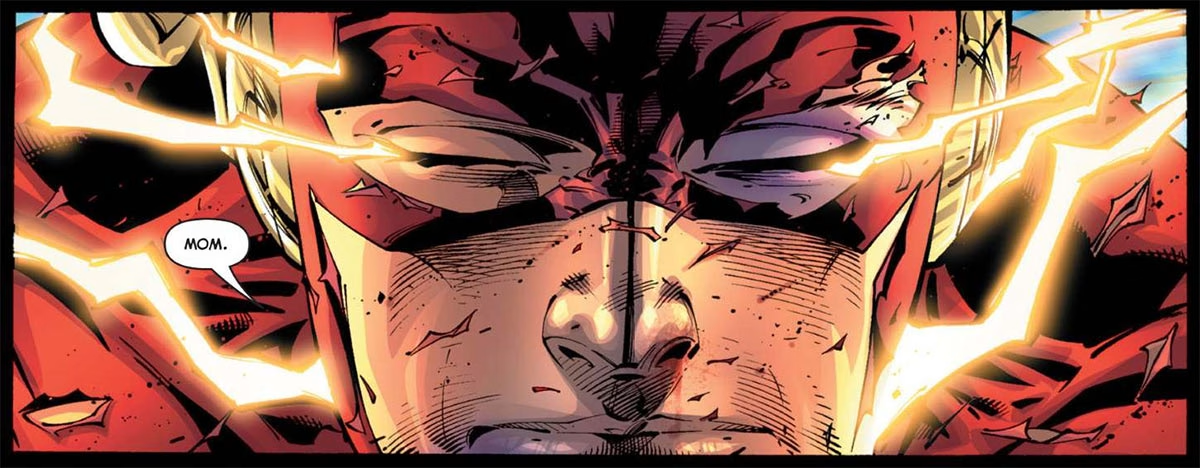
- Flashpoint #5: The final confrontation. The Flash is leading the heroes amid the escalating conflict between Aquaman and Wonder Woman. Now is the time to confront Eobard Thawne.
This reading order is based on the one from Comic Book Treasury.
5. After the Flashpoint: Where to Go Next?
As the story reaches its conclusion in Flashpoint #5, the “Modern Age” officially terminates, and the “New 52” era begins. It’s not an end, but a new beginning. Although Barry Allen had successfully ‘fixed’ the timeline, he did not return to the world he had left.
Here are a few paths to follow post-Flashpoint:
- Your first stop in the New 52 era should be the Justice League by Geoff Johns and Jim Lee (check out Justice League Vol. 1: Origin).
- The Flash was relaunched by Francis Manapul and Brian Buccellato.
- Thomas Wayne came back in The Button and in Doomsday Clock.
- Geoff Jones went back to the world of Flashpoint in the 2022 Flashpoint Beyond miniseries.