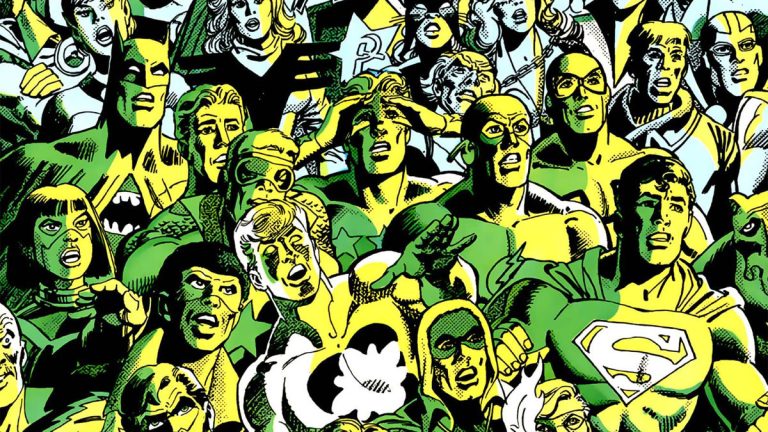
• Millennium (1988) Reading Order: No man escapes the Manhunters during this Weekly Crossover event

    Following the line-wide restructuring initiated by Crisis on Infinite Earths and the subsequent relaunch momentum of Legends, DC Comics introduced Millennium as its next major crossover event. I’m sure readers today may feel the use of the word “major” as an overstatement and, in the overall history of the DC Comics universe, I would certainly concur. Nevertheless, as a publishing initiative, this one was ambitious for the time. Published as an eight-issue weekly limited series between January and February 1988, the project represented one of DC’s most coordinated line-wide efforts of the decade, with extensive crossover chapters running through 45 issues of DC’s ongoing titles.

    Written by Steve Englehart and illustrated primarily by Joe Staton, Millennium centered on the Guardians of the Universe and the revelation that the ancient robotic Manhunters had secretly infiltrated Earth for centuries. The event introduced the “Millennium Week” banner across DC’s publishing line, with individual issues revealing long-standing supporting characters as sleeper agents, an approach that reoriented the DC Universe toward themes of distrust, conspiracy, and institutional corruption.

    Positioned as both a cosmic epic and a paranoid thriller, Millennium marked a tonal shift from the post-Crisis optimism of 1986 to a narrative climate defined by hidden enemies and systemic infiltration. It remains the definitive story of the Manhunter cult’s attempt to thwart the evolution of the “Chosen” ten.

    Read More “Millennium (1988) Reading Order: No man escapes the Manhunters during this Weekly Crossover event”
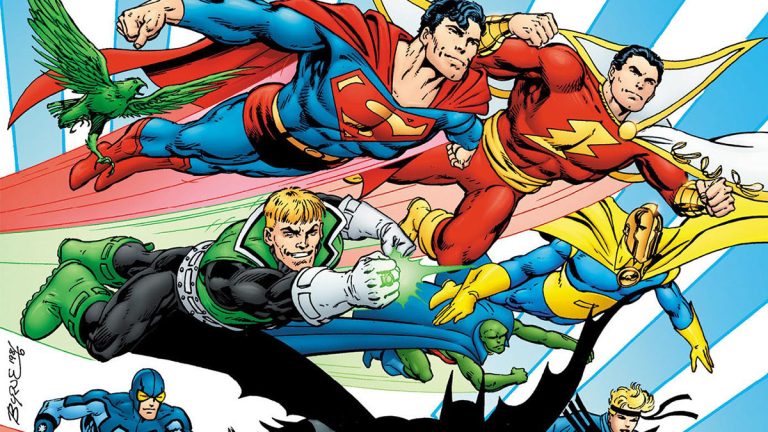
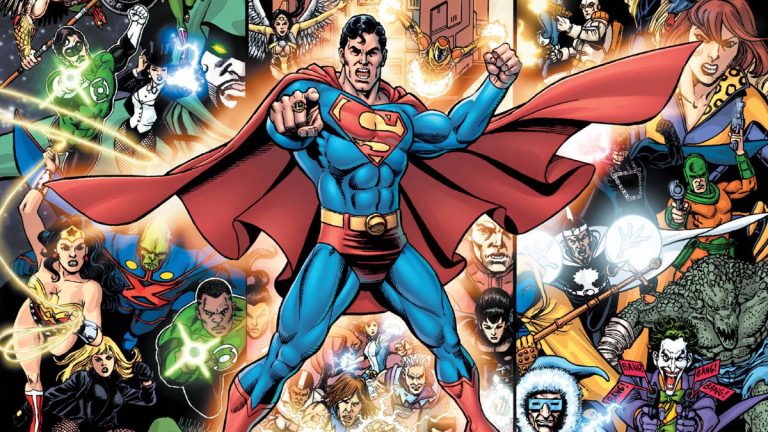
  • Legends (1986) Reading Order: The First Post-Crisis Crossover

    In 1986, DC Comics was fresh off the success of Crisis on Infinite Earths. It was a new era with a rebooted universe. After that, the question was: What next? The answer seems to have been “another crossover event.”

    Before we got the Legends we know today, there was “Crisis of the Soul.” This scrapped 12-issue project was designed to show a world turning on its heroes through spiritual corruption. Though canceled after months of development, some of his ideas survived. In August 1986, editor Mike Gold and a star-studded creative team launched Legends. It wasn’t a sequel to Crisis, but an “introduction” to the modern DC Universe.

    Read More “Legends (1986) Reading Order: The First Post-Crisis Crossover”
  • DC Comics History: Following the Dark Road of the Modern Age

    It’s never easy to pinpoint the exact beginning and end of an era in the history of comics. The conclusion of the Bronze Age and the start of the Modern Age is no exception. It was a transition that occurred as much on the pages of the comics as in the shops, the convergence of multiple publishing efforts and editorial decisions that changed the way comics were sold and read, but also the stories they were allowed to tell.

    Dark, British, Violent, and Paperbacks, it’s 1980s DC Comics

    The key change that occurred in the comic book industry that DC Comics quickly embraced was the emergence of the Direct Market. Consumers were not buying their comics in the newsstands, they started going to comic book shops instead. Also, the old readers were going nowhere and wanted more mature books.

    DC President Jenette Kahn looked for new ways to develop the DC Comics brand with new lines, unexpected licensing deals, and by recruiting emerging talents and allowing them to make their mark. That’s how Frank Miller came and made Ronin, then pushed DC into its dark era with The Dark Knight Returns. This violent story about an old Batman coming back to fight crime in an alternative politicized future was a comic book for adults, an instant success that started to change the creative direction of the company, but also its economic model. It was the book that incited the creation of the DC line of paperbacks, making it available long after its original publication.

    Read More “DC Comics History: Following the Dark Road of the Modern Age”
  • DC Comics History: The Bronze Age, From Explosion to Implosion

    For DC Comics, the Silver Age was an era of reinvention when it came to its line of superhero comics, but it was the same people who were still creating those comics. With Marvel Comics becoming a serious competitor, changes were once again needed, but this time they were just as much on the pages as behind the scenes.

    New editorial director Carmine Infantino brought change in a notable way. The funny animal comics disappeared, and “Weird” comics became à la mode (Weird Western, Weird Adventure Comics, Weird War, Weird Mystery). But Infantino’s important change was to give artists power and to bring new talents in. Marv Wolfman, Len Wein, Denis O’Neil, and Neil Adams soon became important names at DC.

    Read More “DC Comics History: The Bronze Age, From Explosion to Implosion”
  • DC Comics History: The Silver Age Rebirth of Superheroes

    It was on a controversial note that the Golden Age ended. The history of American comics was changed forever by the adoption of the Comics Code. It will take decades to break free of it and, even then, its influence would never completely fade away.

    In March 1955, the Comics Code’s seal began appearing on DC Comics covers, like Action Comics #202, Superman #96, Batman #90, Detective Comics #217, Wonder Woman #73, and more… but not on too many costume superhero books, as those had already started to fade away.

    Read More “DC Comics History: The Silver Age Rebirth of Superheroes”
  • The Origin Story of DC Comics and the Golden Age of Comics

    The History of DC Comics started when Major Malcolm Wheeler-Nicholson, already well-established in the printing industry, set up National Allied Publications and launched New Fun: The Big Comic Magazine in 1935. This was an oversized tabloid edited by Lloyd Jacquet. It worked well enough to justify the launch of another title, New Comics. Soon, the format changed (from tabloid to a more popular half-tabloid trim size) and the title too, as New Fun became More Fun Comics.

    To meet the needs of this new successful venture, Wheeler-Nicholson started working with the printer and distributor Independent News, the company of Harry Donenfeld, who was also interested in investing in this new emerging market.

    Read More “The Origin Story of DC Comics and the Golden Age of Comics”
  • Opening the DC Casebook

    We all have to start somewhere. When it comes to comic books, you just pick one up and read. If you like it and want more, that’s when things may get complicated if you are reading published by the “Big Two.”

    There are already pretty complete guides available on the web that will help you read more. My ambition with the DC Casebook is to do that and more. As I navigate through hordes of reading orders, I get lost between series and characters. There are so many. What do I really need to read? And why?

    It’s positioning yourself to fail to try to answer that, as, even if we would like to believe the contrary, the people behind the comics do not have a master plan, and the way the industry works doesn’t allow for one anyway. So, I can a least try to go to what matters and help readers like me get an understanding of what they are reading and how to move beyond one part of the DC Comics Universe to the other.

    Yes, it’s all about DC Comics here. I began reading comics via Marvel superheroes, but DC Comics is where I found a place that felt more in tune with my sensibilities. More mysteries, more adult-themed books (I’m a Vertigo fan), a bigger openness to risk (at least, from time to time), and a place where my favorite authors and artists found their voices.

    This blog is envisioned as a long-running project, probably years of work, so don’t forget to bookmark it so you can find it again!